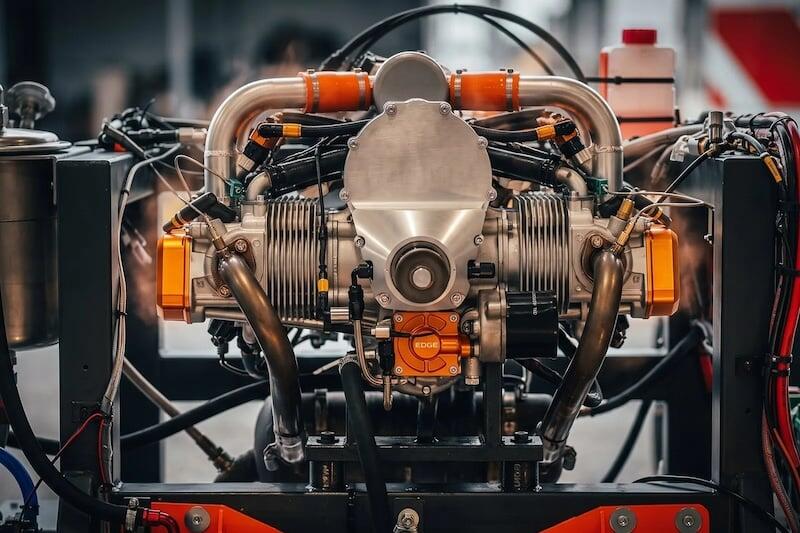
Modified by EdgePerformance, the engine for Zuri's hybrid-electric eVTOL runs at idle power.
Czech startup Zuri has begun testing the powerplant for its planned hybrid-electric tiltprop uncrewed cargo aircraft, a Rotax piston engine modified by Norway's EdgePerformance to run on a range of fuels that provide operational flexibility in civil and military missions.
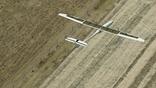
Based on Zuri's full-scale electric vertical-takeoff-and-landing (eVTOL) Technology Demonstrator (TD) 2.0, which is planned to fly early in 2027, the uncrewed cargo aircraft is designed to carry 115 kg (255 lb.) of payload 569 km (353 mi.) with 30-min. reserves.
EdgePerformance specializes in building engines for uncrewed aircraft. The engine selected by Zuri is a modified, fuel-injected, digitally controlled Rotax 912ULS with a power takeoff to drive a generator and the option to run on automotive gasoline or any blend of ethanol up to 100%.
“Fuel flexibility means an operator can run on premium automotive gasoline or ethanol blends of any strength, with Avgas 100LL [low-lead aviation gasoline] as an occasional fallback, whether at a regional airfield or a forward logistics site,” Zuri said in an Oct. 13 blog post.
When used to drive a generator in a hybrid-electric powertrain, there is no airflow from a propeller to help cool the piston engine, so cooling is the biggest challenge to using the proven Rotax in Zuri's eVTOL, EdgePerformance CEO Thomas Hauklien said in the blog. In addition to providing fuel flexibility, the option to run on ethanol blends will help with engine cooling. Using E85, a blend of 85% ethanol and 15% gasoline, heat generation is expected to be reduced by 20-30%, subject to confirmation by testing, Zuri said.
In the TD 2.0, the modified Rotax and generator, together referred to as the genset, power the eVTOL's eight tilting propellers. A buffer battery handles transient power peaks during takeoff, transition and landing and is recharged by the generator in cruise.
EdgePerformance equips the Rotax with an electronic control unit (ECU). A genset control unit developed by Zuri communicates with the ECU, commanding the engine throttle as well as the motor controller that turns generator output into electrical power.
The first engine has run at idle in Prague and is to be installed in a dedicated test facility this month for power and thermal testing under load while running on E85. “The main goal is to find out how much air we will need to keep it in the operational temperature range,” Radim Laga, electric systems lead at Zuri, said in the blog post.
Once thermal data has been collected and analyzed, Zuri plans to modify the cooling system and the fuselage of the TD 2.0 to deliver the required airflow, then finish integrating the generator with the motor controller and genset control unit. Zuri plans a roughly nine-month test campaign following first flight early next year.

Related Content