Lufthansa bids farewell to its last Airbus A340-600.
For Francesco Sciortino, flying the Airbus A340-600 remained special until the very end.
“After landing and on the way to the crew bus, you would always turn around again and look at it,” says Lufthansa Airlines’ chief operating officer, who is also an A330/A340 captain.
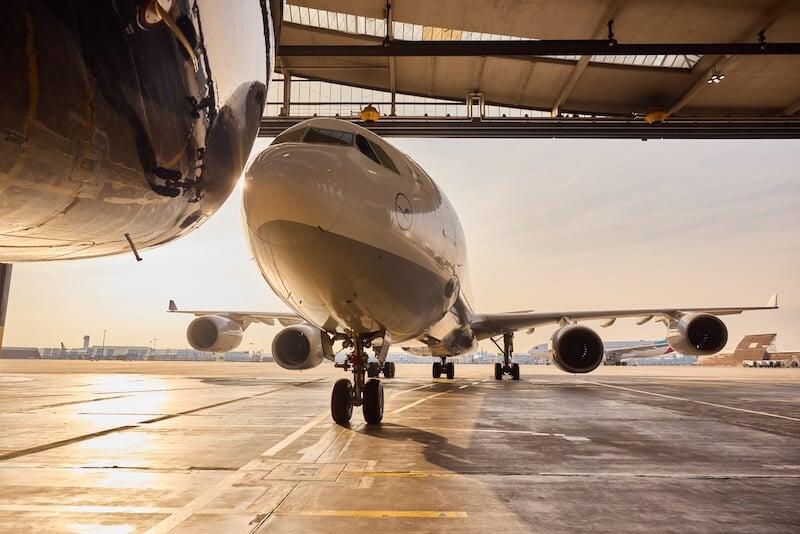
After all, the aircraft has been one of the longest commercial jets ever built, barely fitting the 80 m (262 ft.) box defined for airport maneuvering and parking. A camera installed on the vertical tailplane helped pilots navigate the aircraft around tight corners.
The special moments are now history. On Oct. 19, Lufthansa landed its last three A340-600 commercial flights in Frankfurt. Flight LH 417 from Washington landed at 5:09 a.m., local time, followed by LH 401 from New York’s John F. Kennedy International Airport at 5:26 a.m. LH 419 from Washington, with Sciortino at the controls, landed at 8:30 a.m.
The three aircraft—D-AIHW, D-AIHY and D-AIHZ—ferried to Dusseldorf, where cabin spare parts are being removed, and then to Teruel, Spain, officially for deep storage but really for scrapping. D-AIHX, the fourth remaining Lufthansa A340-600, had flown its last service a day earlier and is awaiting the same fate. All four aircraft are only 17 years old.
Now that Lufthansa has retired its last A340-600s, only four remain in active scheduled service: Mahan Air of Iran operates three aircraft, and Conviasa, of Venezuela, has one. Universal Sky Carrier (USC), an ad hoc charter airline in Germany, has three ex-Lufthansa airframes, although only one of them is currently active, according to Aviation Week’s Fleet Discovery database.
The A340-600 originated in a different era of long-haul travel amid the competitive dynamics between Boeing and Airbus. Boeing introduced the 777 in the mid-1990s, with United Airlines flying the type from 1995. At the time, the Airbus widebody portfolio comprised the A340-200/300 and the A330, which did not have nearly the range that the later A330-300s and the A330-900 of today offer. Airbus needed a larger aircraft to compete with the 777, particularly when it was obvious that Boeing could develop larger variants of the aircraft. The A380 was still in its early planning stages and would be too large for that mission.
The A340-600 did not become a commercial success; the four-engine aircraft turned out to be significantly less economical than the 777, with its fuel burn per seat an estimated 10% higher than the competing aircraft, depending on the mission and configuration. Airbus only ever built 99 of the type, and most airlines retired it during the COVID-19 pandemic. Launch customer Virgin Atlantic, which took delivery of the first aircraft in 2002 and operated 19 at its peak, was among them.
Also, when Boeing launched the 787, it was clear that the A330, and much less so the A340, would not be the answer. Airbus reacted by building the A350, and the days of the A340-600 (and the smaller -300) appeared to be numbered. While that turned out to be true in general, it wasn’t at Lufthansa.
The airline found itself in the worst possible position in recent years, operating an inefficient, aging long-haul fleet that cost it a fortune in extra fuel and, increasingly, maintenance expenses. There is a combination of reasons. Lufthansa bet on four-engine long-haul aircraft for much longer than most competitors, not only with the A340s (11 A340-300s are to remain in service until the end of 2027) but also with the 747s. The airline was the major driver behind Boeing’s decision to launch the 747-8, which turned out to be a commercial failure as a passenger aircraft but a successful freighter.
Lufthansa also did not invest earlier in next-generation aircraft because its margins, even in the boom years of the 2010s, did not really justify higher spending. Now it is forced to make the transition to the A350, 787 and 777X in a compressed time frame.
Lufthansa’s fleet renewal was also significantly held back by delays in the 777-9 program. Like Emirates, it should have received its first aircraft in 2020. The latest schedule calls for the first -9 to be handed over at some point next year, a seven-year delay. If the 777-9 had been on time, all 747-400s and A340s would have long been retired. Since that did not happen, even nine of the venerable 747-400s are still in service.
For the A340-600s, though, that was no longer an option. The currently high cost of fuel made the disadvantage vis-a-vis more modern aircraft even greater. And it was difficult to get spares, brakes in particular.
After 23 years, a small era has ended.

Related Content