
Space Industry Analysis
Jun 20, 2012
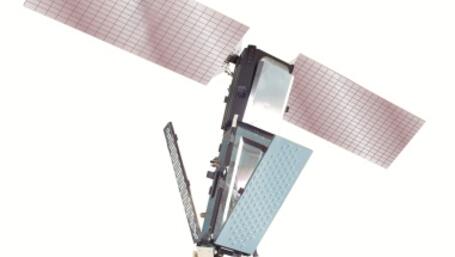
Nav Canada and Iridium are partnering on a project that will bring satellite-based air traffic surveillance to areas of the globe with no coverage
Jun 20, 2012
SINGAPORE — Arianespace Chairman and CEO Jean-Yves Le Gall dismisses talk of consolidation among satellite makers. “In Europe there used to only be two main manufacturers of satellites,” Le Gall told Aviation Week June 19. “A few years ago people were wondering ‘When will they merge?’ The thinking was that it was better to have one rather than two, but then we ended up with three in Europe.”
Jun 20, 2012
PARIS — After several nail-biting weeks, the cross-shaped south solar array on the Intelsat 19 telecommunications satellite deployed on June 12. “We also deployed the communication payload antennas,” said Intelsat Chief Technology Officer Thierry Guilleman in an interview. “We are in good shape to enter into the in-orbit testing phase right now,” a process that will take 2-3 weeks, he says. The deployment occurred following four apogee maneuver firings on June 11.
Jun 20, 2012
NRO A GO: United Launch Alliance and the U.S. Air Force are preparing to launch the National Reconnaissance Office’s classified NROL-38 satellite at 8:28 a.m. EDT June 20 from Space Launch Complex-41 at Cape Canaveral Air Force Station, Fla. Launch was set for June 18 but was pushed back to allow the replacement of an environmental control system duct, which required the Atlas V rocket to be rolled back from the pad. Forecasters showed a 70% chance of favorable weather conditions for launch.
Jun 19, 2012
Upcoming U.S. commercial human spaceflights will be licensed by FAA for launch and reentry, but until private companies start sending their own crews and paying customers into orbit, NASA will decide if their vehicles are safe enough for astronauts. NASA Administrator Charles Bolden and acting FAA Administrator Michael Huerta announced an agreement between their agencies June 18, outlining roles and responsibilities as NASA advances its plans to buy transportation for U.S., Canadian, European and Japanese astronauts to the International Space Station (ISS).
Jun 19, 2012
LOS ANGELES — The U.S. Air Force’s second X-37B Orbital Test Vehicle (OTV-2) has landed after 469 days in space, more than double the time clocked by the OTV-1. As with the first OTV flight, the Air Force remains secretive about the mission, saying only that the Boeing-built X-37B conducted “on-orbit experiments.” In a short statement, it says the vehicle provides “return capability” that allows the Air Force to test new technologies without the same risk faced by other programs.

Jun 19, 2012
Chinese astronauts plan to execute their country’s first manual space docking maneuver on June 24
Jun 18, 2012
Boeing, Lockheed Martin and Virgin Galactic are working under U.S. Defense Advanced Research Projects Agency (Darpa) contracts to design air-launch systems that can orbit sub-100-lb. payloads for $1 million, including range costs. “Previous attempts at air launch did not focus enough on the rocket side,” says Mitchell Burnside Clapp, Darpa’s Airborne Launch Assist Space Access (Alasa) program manager. “They over-invested in an aircraft that could only do one thing—support the launch.”