
Space Industry Analysis
Feb 07, 2013
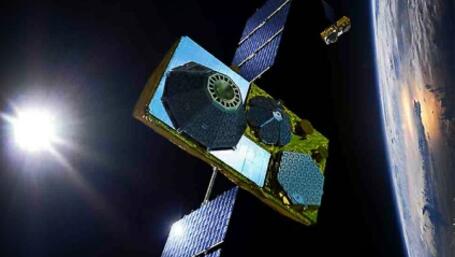
Fourth batch of satellites launched Feb. 6 atop a Russian Soyuz
Feb 07, 2013
Embry-Riddle Aeronautical University has developed the nation’s first undergraduate degree program in commercial space operations, which it plans to introduce at the school’s Daytona Beach, Fla., campus next fall.
Feb 06, 2013
The new partnership between NASA and the European Space Agency (ESA) on the Orion deep-space crew capsule opens the door for more international cooperation in human exploration beyond low Earth orbit, U.S. space officials say. Just as the “critical path” to completion of the International Space Station was shared by U.S. and Russian launch vehicles, future exploration missions based on the four-seat Orion capsule will require European hardware in the capsule’s service module.

Feb 06, 2013
CNES has tripled research and technology budget to €131 million
Feb 06, 2013
MONITORING AGENDA: The worldwide monitoring system set up to verify compliance with the Comprehensive Nuclear-Test-Ban Treaty is a potential untapped treasure trove for science, according to the American Association for the Advancement Of Science (AAAS). “Science is only beginning to discover the value of this $1 billion system for uses beyond the detection of nuclear tests,” AAAS says in announcing a Feb. 17 panel on the subject.
Feb 04, 2013
The loss of a big Boeing-built Intelsat communications satellite in the first failure of a Sea Launch Zenit rocket since the multinational company emerged from bankruptcy protection is likely to make it more difficult for the equatorial launch provider to regain momentum. The company has no firm missions on its manifest beyond the one that failed Jan. 31, and relies on Russian hardware at a time when the reliability of that country’s launchers has been questioned through quality-control issues.
Feb 04, 2013
BEIJING — South Korea’s first satellite is communicating with the ground, demonstrating initial functionality following a launch on a KSLV-1 rocket on Jan. 30. To follow the KSLV-1, which matches a South Korean second stage to a first stage based on Russian technology, South Korea aims at developing its own rocket engine of 10 metric tons (22,000 lb.) thrust by 2016 and a 75-ton-thrust engine by 2018, officials tell local media.
Feb 01, 2013
HOUSTON — The first in a new generation of NASA Tracking and Data Relay Satellites has begun a measured climb to geosynchronous orbit, following a successful launch aboard a United Space Alliance Atlas V rocket late Jan. 30 from Cape Canaveral. The Boeing-built TDRS-K spacecraft marks the first addition in a decade to the aging, seven-spacecraft communications constellation that supports the Ka-, Ku- and S-band requirements of the International Space Station, Hubble Space Telescope and a growing fleet of multi-agency Earth observations satellites.