
Space Industry Analysis
May 16, 2013
GPS LAUNCH: The U.S. Air Force used an Atlas V 401 rocket to launch another Global Positioning System timing and navigation satellite into medium Earth orbit on May 15, replenishing the constellation of 24 spacecraft. Liftoff of the 3,600-lb. spacecraft from Cape Canaveral came at the opening of its launch window at 5:38 p.m. EDT. The launch vehicle’s Centaur upper stage ignited for the first of two burns — planned to be bounded by a 3-hr. coast phase — at 5:42 p.m. EDT, following burnout and staging of the Atlas common core booster.
May 16, 2013
Failure of a second reaction control wheel on NASA’s Kepler planet-finding space telescope has ended data collecting with the spacecraft, but not analysis of the “terabytes” of data already captured.
May 16, 2013
LOS ANGELES — Sierra Nevada’s Dream Chaser engineering test article (ETA) is being reassembled at NASA’s Dryden Flight Research Center at Edwards AFB, Calif., in preparation for the start of approach-and-landing flight tests later this summer. Sierra Nevada is competing with the lifting body vehicle against alternative capsule designs developed by Space Exploration Technologies (SpaceX) and Boeing for NASA’s commercial crew program under a $212.5 million Commercial Crew integrated Capability (CCiCap) contract awarded last August.
May 15, 2013
HOUSTON — Developers report a favorable conclusion to the first phase of the long-running Robotic Refueling Mission (RRM) under way outside the International Space Station, the joint NASA/Canadian Space Agency initiative intended to demonstrate technologies to extend the operations of aging satellites.
May 15, 2013
HOUSTON — Canada’s first space mission command came to a successful close late May 13, as a Russian Soyuz spacecraft carrying Canada’s Chris Hadfield, U.S. astronaut Tom Marshburn and cosmonaut Roman Romanenko departed the International Space Station and descended safely to Earth. Their TMA-07M capsule landed under parachute in southern Kazakhstan at 9:31 p.m. EDT, or May 14 at 8:31 a.m. local time, ending a 146-day mission.
May 14, 2013
A time-management trick learned by the Skylab 4 crew almost 40 years ago continues to work on the International Space Station today, according to commanders of missions on each orbital laboratory. Gerald Carr, the Skylab 4 commander, told an audience marking the 40th anniversary of the Apollo-era space-station program that his three-man crew held “the first sensitivity group in space” after controllers in Houston overloaded them with work.
May 14, 2013
Weeks or months of analysis will precede declaring full repair
May 13, 2013
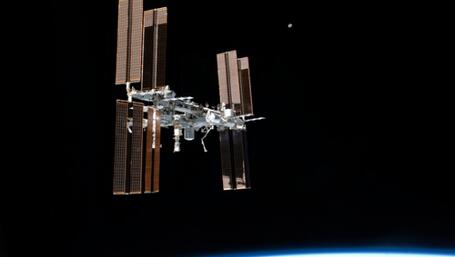
HOUSTON — Two U.S. astronauts were preparing for a possible May 11 spacewalk outside the International Space Station (ISS) in response to a significant ammonia coolant leak in the thermal control system radiator of the orbiting lab’s oldest solar power module. The NASA-led ISS Mission Management Team had scheduled a meeting for late May 10 to consider final approval for a 6-7-hr. extravehicular activity (EVA) to replace the suspected source of the leak, a pump and flow control system (PFCS) electronics box, or to carry out further troubleshooting.