https://ngtest.aviationweek.com/themes/custom/particle/dist/app-drupal/assets/awn-logo.svg
Skip to main content
  • Market Sector
    • Aerospace
    • Air Transport
    • MRO
    • Defense and Space
    • Business Aviation
  • Markets
    • Aerospace
      • Aircraft & Propulsion
      • Connected Aerospace
      • Emerging Technologies
      • Manufacturing & Supply Chain
      • Advanced Air Mobility
      • Commercial Space
      • Sustainability
    • Air Transport
      • Aircraft & Propulsion
      • Interiors & Connectivity
      • Airports & Networks
      • Airlines & Lessors
      • Safety, Ops & Regulation
      • Maintenance & Training
      • Sustainability
    • MRO
      • Aircraft & Propulsion
      • Interiors & Connectivity
      • Emerging Technologies
      • Supply Chain
      • Safety, Ops & Regulation
      • Workforce & Training
      • Sustainability
    • Defense and Space
      • Aircraft & Propulsion
      • Sensors & Electronic Warfare
      • Missile Defense & Weapons
      • Supply Chain
      • Budget, Policy & Operations
      • Space
      • Sustainability
    • Business Aviation
      • Aircraft & Propulsion
      • Interiors & Connectivity
      • Airports, FBOs & Suppliers
      • Flight Deck
      • Safety, Ops & Regulation
      • Maintenance & Training
      • Sustainability
  • Marketplace
  • Services
    • Services
      • Advertising
      • Marketing Services
      • Fleet, Data & APIs
      • Research & Consulting
      • Network and Route Planning
      • Marketplace
  • Store
    • Market Sector

      • Aerospace
      • Air Transport
      • MRO
      • Defense and Space
      • Business Aviation
    • Type View All Products
      • Intelligence Bundles
        • AWIN - Premium
        • AWIN - Aerospace and Defense
        • AWIN - Business Aviation
        • AWIN - Commercial Aviation
      • Market Briefings
        • Advanced Air Mobility Report - NEW!
        • Aerospace Daily & Defense Report
        • Aviation Daily
        • SpeedNews
        • The Weekly of Business Aviation
      • Directories
        • Air Charter Guide
        • Aviation Week Marketplace
        • Route Exchange
        • The Engine Yearbook
      • Data Services
        • AC-U-KWIK
        • Aircraft Bluebook
        • Airportdata.com
        • Airport Strategy and Marketing (ASM)
        • CAPA – Centre for Aviation
        • Fleet Discovery Civil
        • Fleet Discovery Military
        • Fleet & MRO Forecast
        • MRO Prospector
      • Publications
        • Air Transport World
        • Aviation Week & Space Technology
        • Aviation Week & Space Technology - Inside MRO
        • Business & Commercial Aviation
        • CAPA - Airline Leader
        • Routes magazine
        • ShowNews
      • Resources
        • Downloadable Reports
  • Events
    • Recent webinars
    • Events View All Events
      • MRO
        • MRO Americas
        • MRO Asia
        • MRO Australasia
        • MRO Baltics & Eastern Europe Region
        • MRO Europe
        • MRO Latin America
        • MRO Middle East
        • Military Aviation Logistics and Maintenance Symposium (MALMS)
        • Asia Aerospace Leadership Forum & MRO Asia-Pacific Awards
      • Commercial Aviation/A&D
        • A&D Mergers and Acquisitions
        • A&D Programs
        • A&D Manufacturing
        • A&D Raw Materials
        • A&D SupplyChain
        • A&D SupplyChain Europe
        • Advanced Air Mobility
        • Aero-Engines Americas
        • Aero-Engines Europe
        • Aero-Engines Asia-Pacific
        • Digital Transformation Summit
        • Engine Leasing Trading & Finance Europe
        • Engine Leasing, Trading & Finance Americas
      • Air Transport
        • Routes Americas
        • Routes Europe
        • Routes World
        • ATW Airline Awards
        • CAPA Airline Leader Summit
        • CAPA Americas Aviation Summit
        • CAPA Latin America Aviation Summit
        • CAPA Australia Pacific Aviation Summit
        • CAPA Asia Aviation Summit & Sustainability Awards
        • CAPA World Aviation Outlook Summit
        • GAD Americas
        • GAD World
      • Aerospace and Defense
        • A&D Mergers and Acquisitions Conference (ADMA)
        • A&D Manufacturing Conference
        • Aerospace Raw Materials & Manufacturers Supply Chain Conference (RMC)
        • A&D Programs
      • Awards
        • Aviation Week 20 Twenties
        • Aviation Week Laureate Awards
        • Program Excellence Awards and Banquet
        • CAPA Asia Aviation Summit & Awards for Excellence
  • About
    • About Aviation Week Network
      • Our Story
      • Content and Data Team
      • Aviation Week & Space Technology 100-Year
    • Contact Us
      • Subscriber Services
      • Advertising, Marketing Services & List Rentals
      • Content Sales
      • Events
      • PR & Communications
      • Content Licensing and Reprints
      • FAQ
  • Log In
  • Register
  • My Account
    • Profile
    • Sign Out
  • AWIN Access
  • My cart
    Back to
  1. Defense and Space
  2. Space

Share

Emerging Small-Satellite Launch Vehicles

Graham Warwick December 16, 2015

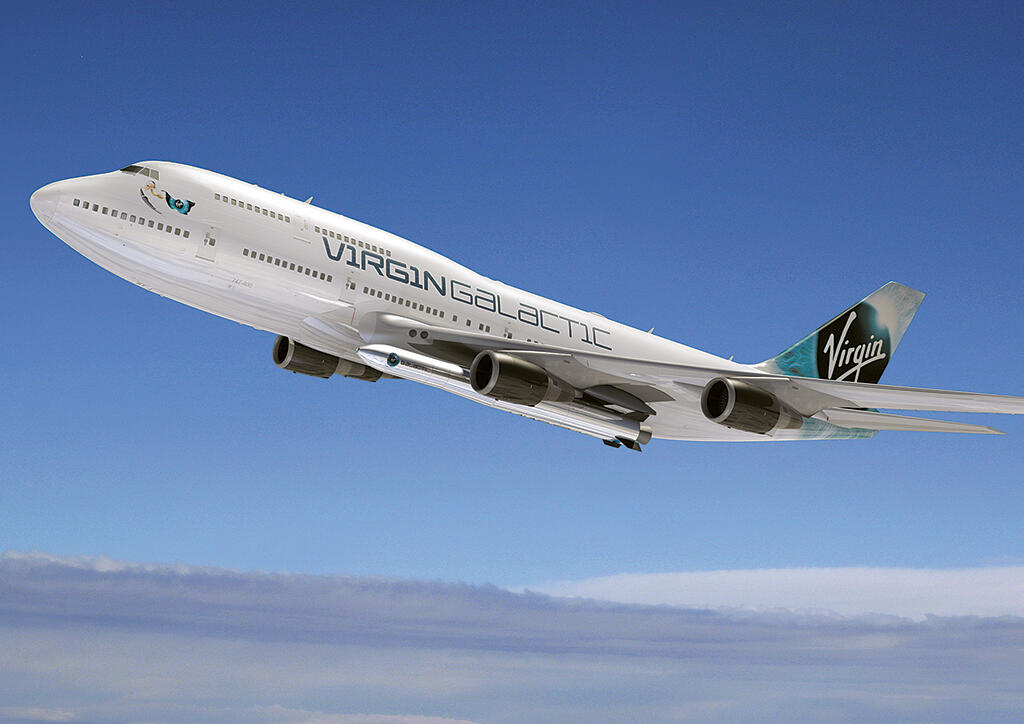
Virgin Galactic LauncherOne

Credit: Virgin Galactic

Carried aloft under the wing of a Boeing 747-400 and released at 35,000-40,000 ft., Virgin Galactic’s LauncherOne will place 200-kg (440-lb.) payloads into sun-synchronous orbit for under $10 million. The 55,000-lb. booster has single turbopump-fed liquid-oxygen/kerosene main and upper-stage engines. Test launches are planned for 2017, and one will carry more than 12 cubesats for NASA under a $4.7 million contract.
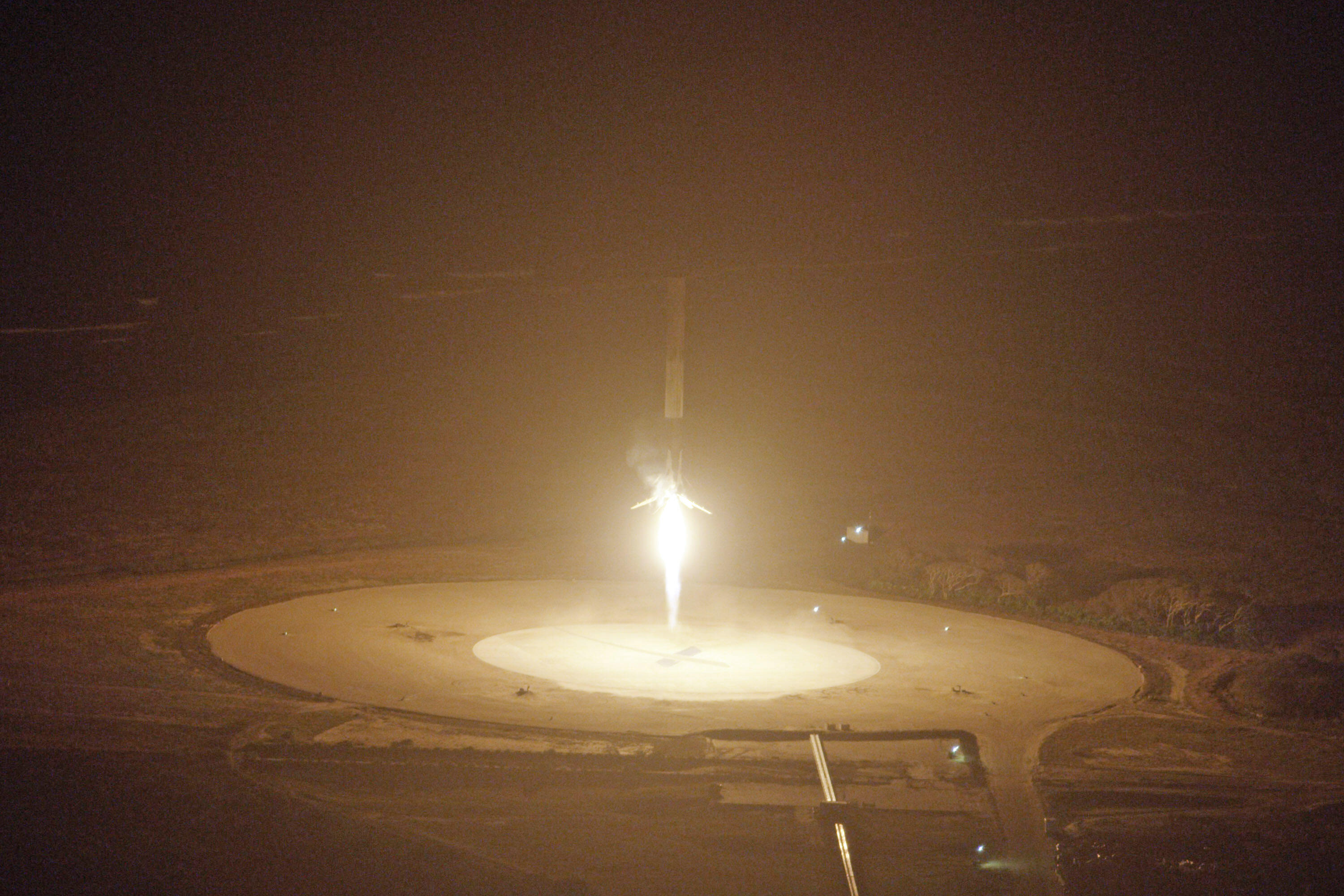
SpaceX Lands Falcon 9 First Stage

Credit: SpaceX

SpaceX successfully landed the first stage of its Falcon 9 launch vehicle on Dec. 21 after placing 11 satellites into low Earth orbit for Orbcomm. The vertical landing on a surplus launch pad at Cape Canaveral followed failed attempts to land the reusable first stage on an unmanned barge at sea.

Rocket Lab Electron

Credit: Rocket Lab

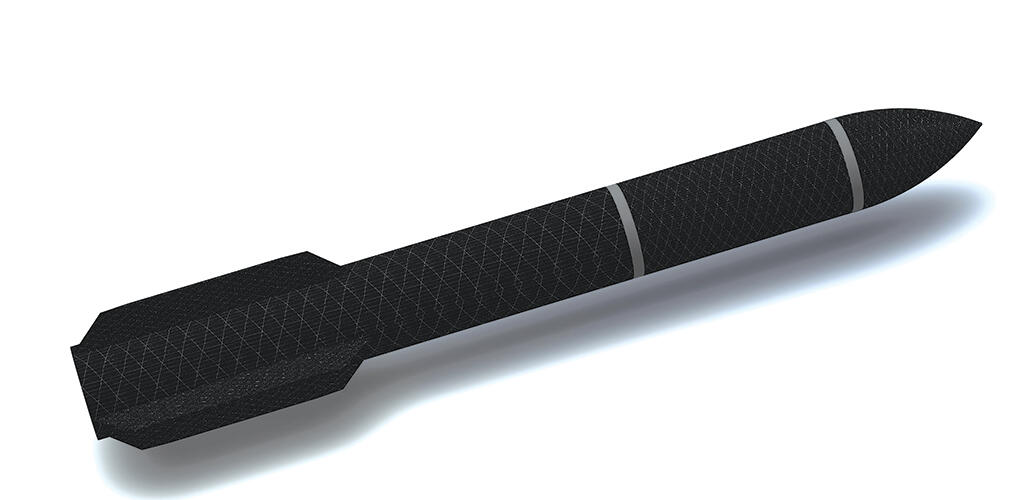
Rocket Lab’s Electron is a carbon-composite, liquid-oxygen/kerosene-fueled vehicle with battery-powered turbopump and 3-D-printed rocket motors. Designed to place 150 kg into sun-synchronous orbit for $4.9 million, the booster uses the same motor in both stages, the first with multiple engines and a single vacuum engine on the second. Flights are to begin in 2016, and Rocket Labs has a $6.95 million NASA launch contract.
CubeCab Cab-3A

Credit: CubeCab

California-based CubeCab plans to provide individual launches for 3U cubesats, with the ability to place 5 kg into 400-km polar orbit for a target $250,000. Using 3-D-printed components and room-temperature-storable propellants, the Cab-3A will be air-launched from an F-104 Starfighter at Mach 1.8 and high altitude. CubeCab hopes to begin flights in 2018 and aims to support 100 launches a year.
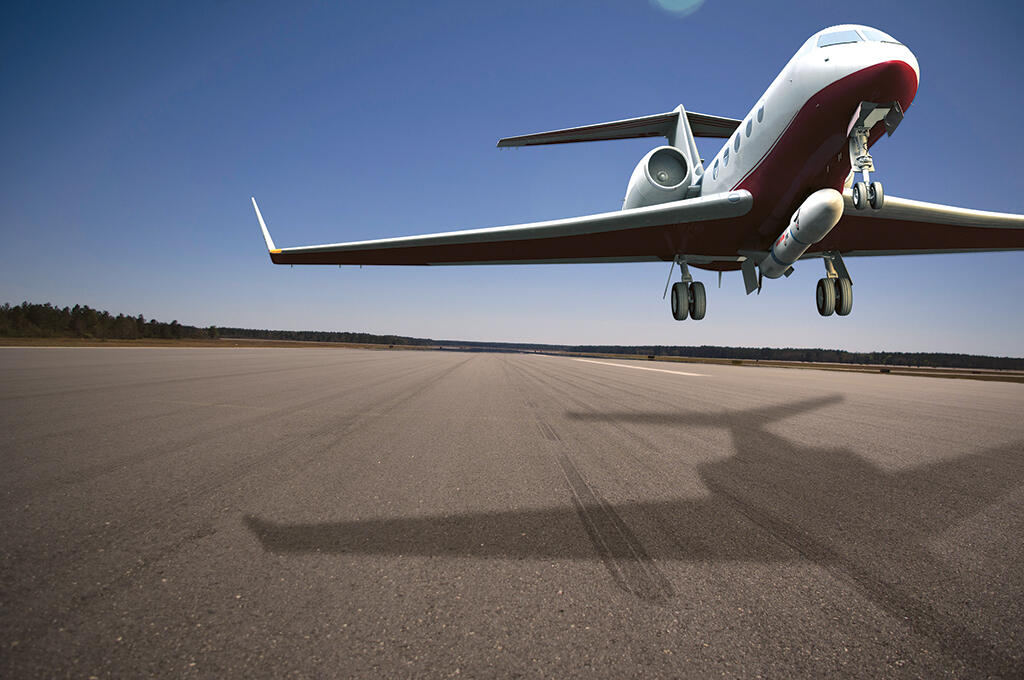
Generation Orbit GOLauncher

Credit: Generation Orbit

Atlanta-based Generation Orbit is developing an air-launched, single-stage suborbital rocket for hypersonic flight testing, the GO-1, as a step toward a low-Earth-orbit launch vehicle larger than the originally planned, 45-kg-payload GO-2. With funding from the Air Force Research Laboratory and NASA, first launch of the liquid-oxygen/kerosene GO-1 from a Gulfstream III is planned for the end of 2017.
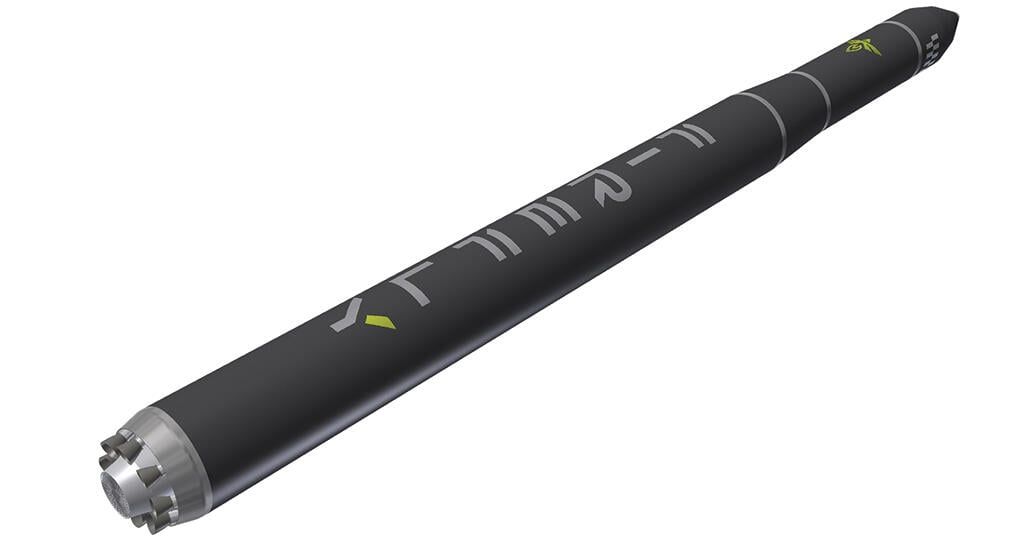
Firefly Space Systems Alpha

Credit: Firefly Space Systems

Texas-based Firefly Space Systems’ two-stage, carbon-composite booster will launch 400 kg to 400-km (250-mi.), or 200 kg to 500-km sun-synchronous orbit. Both stages use the same pressure-fed liquid-oxygen/kerosene rocket combustor, but the first stage has a plug cluster aerospike engine with 12 combustors around a truncated cone. Firefly has a $5.5 million NASA contract for a cubesat launch in 2018.

Boeing/Darpa Alasa

Credit: Boeing

Not all smallsat launcher developments pan out, and Darpa has canceled plans to flight-test Boeing’s Airborne Launch Assist Space Access vehicle from an F-15E because of problems with the energetic monopropellant fuel. Designed to place 45 kg into low Earth orbit within 24 hr. of call-up, for $1 million a flight, the 24-ft.-long vehicle had four forward-mounted engines.
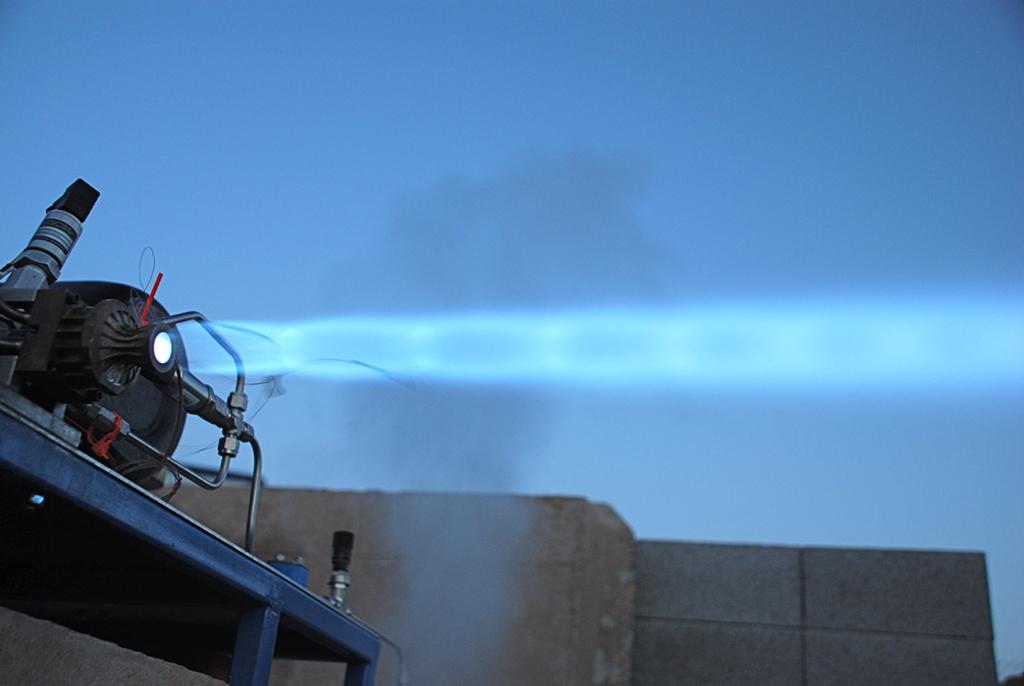
Ventions Salvo

Credit: Ventions

Developed by San Francisco-based Ventions for Darpa, the Small Air Launch Vehicle (Salvo) is a precursor to the Pentagon research agency’s Boeing Airborne Launch Assist Space Access (Alasa) program. Salvo is a two-stage rocket with electric pump-fed liquid-oxygen/kerosene engines, designed to place a 3U cubesat into low Earth orbit after release from an F-15 fighter. Details are scarce, but Ventions delivered a test article to Eglin AFB, Florida, in October 2104 to begin flight testing.
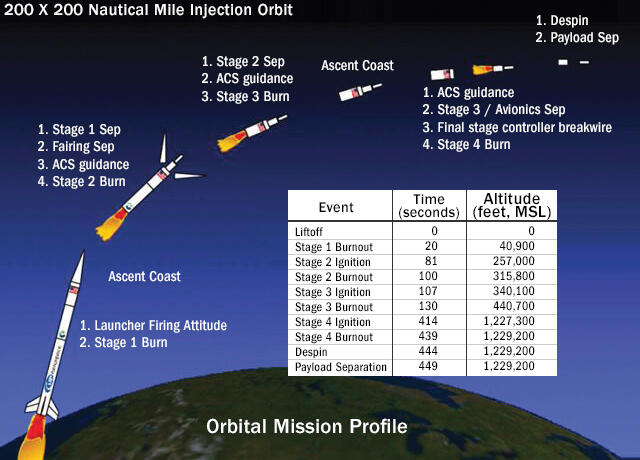
UP Aerospace Spyder

Credit: UP Aerospace

UP Aerospace, which manufactures and operates the SpaceLoft suborbital sounding rocket , is developing a rail-launched dedicated cubesat launcher, the Spyder. Weighing less than 2,500 lb., the Spyder is a four-stage, all-solid booster designed to orbit up to six 1U cubesats—a 16-lb. payload to 200-nm low Earth orbit for a target launch cost of $1 million. UP hopes to begin launches in mid-2018.

Super Strypi

Credit: U.S. Air Force

Super Strypi, or the Spaceborne Payloads Assists Rocket Kauai (Spark), is a rail-launched, low-cost smallsat launcher developed by a partnership of the University of Hawaii, Sandia National Laboratories, and Aerojet Rocketdyne, and funded by the Pentagon’s Operationally Responsive Space Office. The three-stage, all-solid booster is designed to place 250 kg into sun-synchronous orbit. The first flight on Nov. 3, 2015, failed soon after liftoff. A second is planned for 2016.
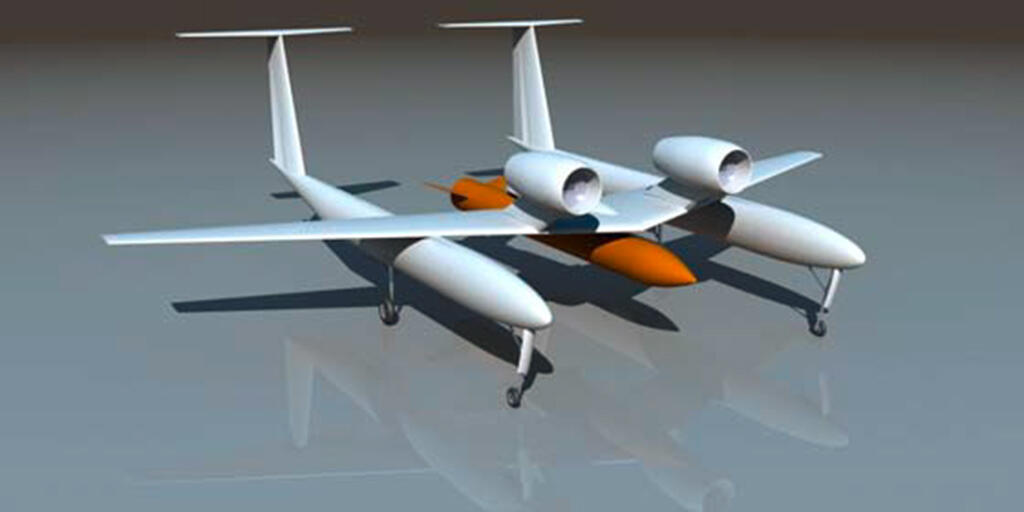
Onera Altair

Credit: Onera

French research organization Onera is leading a European Union research program to define the architecture, develop a business plan and produce an industrial proposal for a low-cost small satellite launcher using an unmanned aircraft as the reusable first stage. The 36-month Altair project is being funded under the EU’s Horizon 2020 research framework program. The goal is to launch satellites in the 50-150-kg range into low Earth orbit at altitudes of 400-1,000 km.

Interorbital Systems

Credit: Interorbital Systems

Mojave, California-based Interorbital Systems (IOS) plans its first orbital launch in the fourth quarter of 2016, carrying 24 nanosats to low Earth orbit from an ocean-based platform. The launch will involve the company’s Neptune 5 (N5) launch vehicle comprising five common propulsion modules burning hypergolic nitric acid and turpentine. IOS quotes prices starting at $500,000 to launch 20 kg on an N3, through $1 million for 40 kg on an N5 to $2.5 million for 80 kg on a nine-module N9.

Previous
Next

An expanding market for cubesats and other small satellites is driving development of low-cost launch vehicles.

Graham Warwick

Graham leads Aviation Week's coverage of technology, focusing on engineering and technology across the aerospace industry, with a special focus on identifying technologies of strategic importance to aviation, aerospace and defense.

Aviation Week Intelligence Network
Monitor the market and connect your business to the people, programs and proprietary data driving the Aerospace & Defense market - only available with AWIN.

ASD_AWIN_thumbnail_270

Stay Connected.
Stay Informed
Grow Your Business.

Learn How

Follow us on

Markets

  • Aerospace
  • Air Transport
  • MRO
  • Defense and Space
  • Business Aviation

Products

  • AWIN Intelligence Bundles
  • Market Briefings
  • Publications
  • Data Services
  • Directories
  • Resources

Contact Us

  • Subscriber Services
  • Advertising, Marketing Services & List Rentals
  • Content Sales
  • Events
  • PR & Communications
  • Content Licensing and Reprints
  • FAQ

Other Resources

  • Aviation Week Marketplace
  • Knowledge Center
  • Newsletters
  • ShowNews
  • Advertising - Media Kits
Copyright © 2026. All rights reserved. Informa Markets, a trading division of Informa PLC.
  • Accessibility
  • Privacy Policy
  • Cookie Policy
  • Terms of Use