
1999: Lockheed’s Stunning Spy Satellite Loss – And Comeback
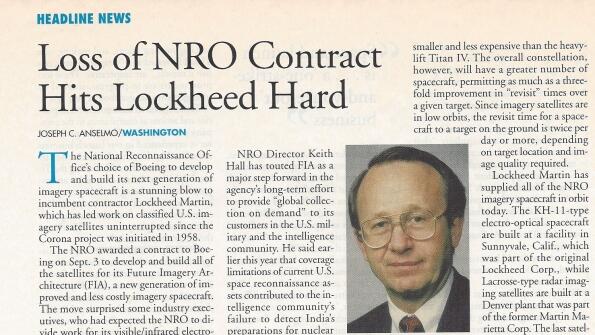
In September 1999, the National Reconnaissance Office dumped its incumbent imagery satellite contractor, Lockheed Martin, in favor of a bolder and less costly proposal led by Boeing.
The Future Imagery Architecture award for visible/infrared electro-optical satellites and radar imaging spacecraft was a huge blow to Lockheed, which had led work on classified U.S. imagery satellites uninterrupted for more than 40 years. I was Aviation Week’s space technology editor at the time, and noted in an article that Boeing’s proposal offered substantial savings, using upgraded technologies to offer twice the performance at half the cost.
Alas, it was too much of a stretch for Boeing. Six years later, FIA’s costs had ballooned from $6 billion to at least $15 billion –- in part due to ever-shifting government requirements -- and the electro-optical satellites were at least five years behind schedule. Fed up and faced with a looming coverage gap, the Bush administration returned the work on the electro-optical spacecraft to Lockheed Martin.
A September 2005 article by military editor Amy Butler highlighted a pointed message to contractors from then-National Intelligence Director John Negroponte: “perform or get terminated.”
