





https://ngtest.aviationweek.com/themes/custom/particle/dist/app-drupal/assets/AW_logo_horizontal_small_white.svg
Skip to main content
  • Market Sector
    • Aerospace
    • Air Transport
    • MRO
    • Defense and Space
    • Business Aviation
  • Markets
    • Aerospace
      • Aircraft & Propulsion
      • Connected Aerospace
      • Emerging Technologies
      • Manufacturing & Supply Chain
      • Advanced Air Mobility
      • Commercial Space
      • Sustainability
    • Air Transport
      • Aircraft & Propulsion
      • Interiors & Connectivity
      • Airports & Networks
      • Airlines & Lessors
      • Safety, Ops & Regulation
      • Maintenance & Training
      • Sustainability
    • MRO
      • Aircraft & Propulsion
      • Interiors & Connectivity
      • Emerging Technologies
      • Supply Chain
      • Safety, Ops & Regulation
      • Workforce & Training
      • Sustainability
    • Defense and Space
      • Aircraft & Propulsion
      • Sensors & Electronic Warfare
      • Missile Defense & Weapons
      • Supply Chain
      • Budget, Policy & Operations
      • Space
      • Sustainability
    • Business Aviation
      • Aircraft & Propulsion
      • Interiors & Connectivity
      • Airports, FBOs & Suppliers
      • Flight Deck
      • Safety, Ops & Regulation
      • Maintenance & Training
      • Sustainability
  • Marketplace
  • Services
    • Services
      • Advertising
      • Marketing Services
      • Fleet, Data & APIs
      • Research & Consulting
      • Network and Route Planning
      • Marketplace
  • Store
    • Market Sector

      • Aerospace
      • Air Transport
      • MRO
      • Defense and Space
      • Business Aviation
    • Type View All Products
      • Intelligence Bundles
        • AWIN - Premium
        • AWIN - Aerospace and Defense
        • AWIN - Business Aviation
        • AWIN - Commercial Aviation
      • Market Briefings
        • Advanced Air Mobility Report - NEW!
        • Aerospace Daily & Defense Report
        • Aviation Daily
        • SpeedNews
        • The Weekly of Business Aviation
      • Directories
        • Air Charter Guide
        • Aviation Week Marketplace
        • Route Exchange
        • The Engine Yearbook
      • Data Services
        • AC-U-KWIK
        • Aircraft Bluebook
        • Airportdata.com
        • Airport Strategy and Marketing (ASM)
        • CAPA – Centre for Aviation
        • Fleet Discovery Civil
        • Fleet Discovery Military
        • Fleet & MRO Forecast
        • MRO Prospector
      • Publications
        • Air Transport World
        • Aviation Week & Space Technology
        • Aviation Week & Space Technology - Inside MRO
        • Business & Commercial Aviation
        • CAPA - Airline Leader
        • Routes magazine
        • ShowNews
      • Resources
        • Downloadable Reports
  • Events
    • Recent webinars
    • Events View All Events
      • MRO
        • MRO Americas
        • MRO Asia
        • MRO Australasia
        • MRO Baltics & Eastern Europe Region
        • MRO Europe
        • MRO Latin America
        • MRO Middle East
        • Military Aviation Logistics and Maintenance Symposium (MALMS)
        • Asia Aerospace Leadership Forum & MRO Asia-Pacific Awards
      • Commercial Aviation/A&D
        • A&D Mergers and Acquisitions
        • A&D Programs
        • A&D Manufacturing
        • A&D Raw Materials
        • A&D SupplyChain
        • A&D SupplyChain Europe
        • Advanced Air Mobility
        • Aero-Engines Americas
        • Aero-Engines Europe
        • Aero-Engines Asia-Pacific
        • Digital Transformation Summit
        • Engine Leasing Trading & Finance Europe
        • Engine Leasing, Trading & Finance Americas
      • Air Transport
        • Routes Americas
        • Routes Europe
        • Routes World
        • ATW Airline Awards
        • CAPA Airline Leader Summit
        • CAPA Americas Aviation Summit
        • CAPA Latin America Aviation Summit
        • CAPA Australia Pacific Aviation Summit
        • CAPA Asia Aviation Summit & Sustainability Awards
        • CAPA World Aviation Outlook Summit
        • GAD Americas
        • GAD World
      • Aerospace and Defense
        • A&D Mergers and Acquisitions Conference (ADMA)
        • A&D Manufacturing Conference
        • Aerospace Raw Materials & Manufacturers Supply Chain Conference (RMC)
        • A&D Programs
      • Awards
        • Aviation Week 20 Twenties
        • Aviation Week Laureate Awards
        • Program Excellence Awards and Banquet
        • CAPA Asia Aviation Summit & Awards for Excellence
  • About
    • About Aviation Week Network
      • Our Story
      • Content and Data Team
      • Aviation Week & Space Technology 100-Year
    • Contact Us
      • Subscriber Services
      • Advertising, Marketing Services & List Rentals
      • Content Sales
      • Events
      • PR & Communications
      • Content Licensing and Reprints
      • FAQ
  • Log In
  • Register
  • My Account
    • Profile
    • Sign Out
  • AWIN Access
  • My cart
    Back to
  1. Defense and Space

Share

Seven Forces That Could Reshape Defense

Byron Callan October 12, 2016

A New Wave of Consolidation?

Credit: Ashton B. Carter in 2013, as deputy Defense secretary. Credit: Glenn Fawcett/U.S. Defense Department

Current U.S. policy was set forth in 2011 by then-Under Secretary of Defense for Acquisition, Technology and Logistics Ash Carter when he stated that the Defense Department would block mergers among its five or six largest contractors. Though unlikely, the next administration may conceivably bring new attitudes regarding the size and scale of large defense contractors. A new wave of consolidation among the largest companies could be the most significant change in structure. Divestitures could be triggered by mega-deals, too.

New Market Entrants

Credit: SpaceX Falcon 9 first stage. Credit: SpaceX

While startups have not yet triggered a defense sector restructuring, that could change by 2017-19. The military space sector may be the most vulnerable to change if SpaceX can conclusively demonstrate the economics of a reusable booster. Smaller satellite networks and other launch concepts could create further pressure on heritage defense space operations. If the Pentagon can lower barriers to entry in defense and encourage more new entrants, this could compel heritage companies to choose where they can and cannot compete. Private technology companies may bring very different business models and financial objectives than public ones, and this is another feature that could shape industry structure.

The British Pound’s Dive

Credit: 123RF Stock Photo

Although currency exchange rates are probably not top of mind as a factor shaping defense, in the mid-2000s BAE Systems purchased Armor Holdings and United Defense, and Cobham, Qinetiq and Serco also acquired U.S. operations. At that time, the exchange rate of the U.S. dollar to the British pound was approximately $1.80-2.00—much higher than the current rate of $1.24. If the U.S. dollar strengthens further against the pound or euro, it could make some European defense operations relative bargains, and this could be a factor in spurring another round of transatlantic consolidation. Defense in the U.S. is mainly an export business that builds products in America. If currency exchange rates diverge further, it may make sense for management and boards to consider more transnational footprints to remain globally competitive.

Unlocking Value

Credit: Gulfstream G550. Credit: Gulfstream

Analysts and investors have bid up defense valuations in the belief that a new defense spending upturn is starting. They are generally more negative on commercial aerospace because of book-to-bill trends and product transitions and softness in business jets. Activist investors could seek to exploit these valuation differences, particularly in companies whose portfolio straddles both commercial aerospace and defense by pushing to unlock the value of defense operations accorded a commercial aerospace valuation.

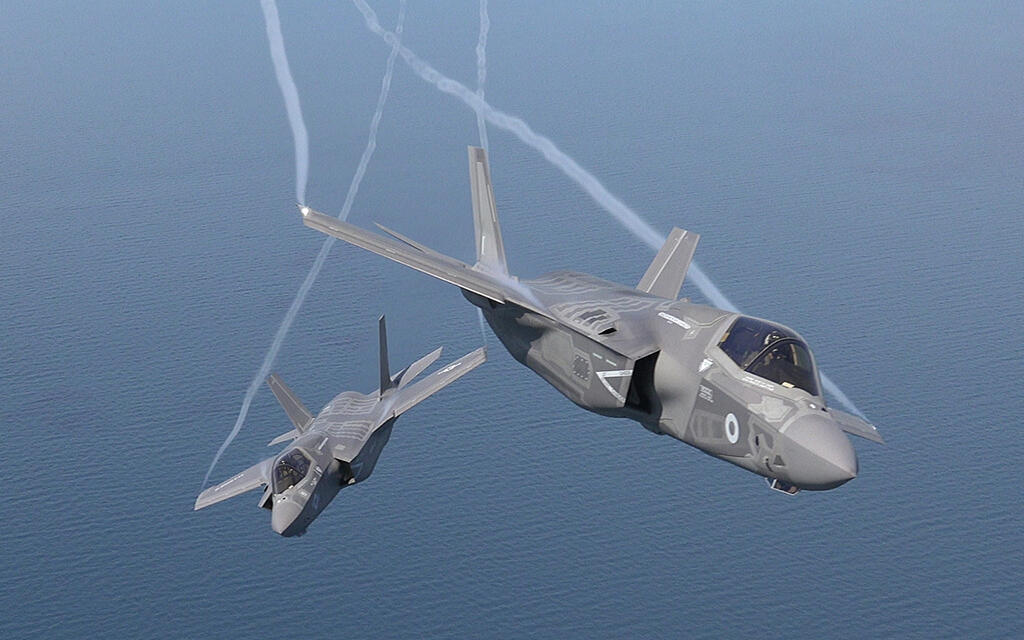
Wider Use of Open Architectures and Open-Source Software

Credit: Lockheed Martin F-35s flying over the UK. Credit: Lockheed Martin

These will also bear on where value can be created in defense. Companies may lose sustainment of proprietary systems on platforms and see reduced scope of software work. However, value should be created for companies that can rapidly develop and field new subsystems, though that may take more research and development.

Dearth Of Middle-Size Defense Companies

Credit: U.S. Army UH-60 Black Hawk helicopter. Credit: Capt. Brian Harris/U.S. Army

Since the 1970s and ’80s or earlier, very few new entrants in defense have grown to several hundreds of millions of dollars in scale. Most such companies were snapped up in the 1990s and 2000s. Growth by acquisition of defense product companies may be a more difficult strategy to execute. There were divestitures of product-focused defense businesses in the 2000s that were not seen as good fits in defense conglomerates, but that trend may accelerate in the coming years, particularly if operations are not contributing to growth.

New Technologies

Credit: Lockheed Martin Concept

Directed-energy and rail-gun systems could change prospects for energetics suppliers and companies providing kinetic weapons that might be displaced. Additive manufacturing may change the economics of spare parts, and autonomous systems could influence needs for support, sustainment and training. 

The defense sector of 2021 or 2026 will look decidedly different than the one of today.

Previous
Next

The next 5-10 years are bound to see changes in the structure of the global defense sector. That structure has evolved since the 1990s consolidation from which emerged five major U.S. contractors—with defense sales in excess of $10 billion—and four national defense champions in Europe. The 2000s saw the rise and fall of companies that addressed the immediate needs of the wars in Iraq and Afghanistan, and more recently a bevy of public defense services companies in the U.S. have been created by portfolio reshuffling and divestitures. 

It is tempting to conclude that today’s defense sector structure will be the same in 2021 or 2026, but there are factors and forces that are bound to bear on how company management teams and boards of directors envision creating value for shareholders—and how they can avoid value destruction. Here are seven to consider.

Contributing columnist Byron Callan is a director at Capital Alpha Partners. 

 

Byron Callan

Contributing columnist Byron Callan is a director at Capital Alpha Partners in Washington.

Aviation Week Intelligence Network
Monitor the market and connect your business to the people, programs and proprietary data driving the Aerospace & Defense market - only available with AWIN.

ASD_AWIN_thumbnail_270

Stay Connected.
Stay Informed
Grow Your Business.

Learn How

Follow us on

Markets

  • Aerospace
  • Air Transport
  • MRO
  • Defense and Space
  • Business Aviation

Products

  • AWIN Intelligence Bundles
  • Market Briefings
  • Publications
  • Data Services
  • Directories
  • Resources

Contact Us

  • Subscriber Services
  • Advertising, Marketing Services & List Rentals
  • Content Sales
  • Events
  • PR & Communications
  • Content Licensing and Reprints
  • FAQ

Other Resources

  • Aviation Week Marketplace
  • Knowledge Center
  • Newsletters
  • ShowNews
  • Advertising - Media Kits
Copyright © 2026. All rights reserved. Informa Markets, a trading division of Informa PLC.
  • Accessibility
  • Privacy Policy
  • Cookie Policy
  • Terms of Use