
Pilot Report: Aviation Week Flies The Gripen (1999)
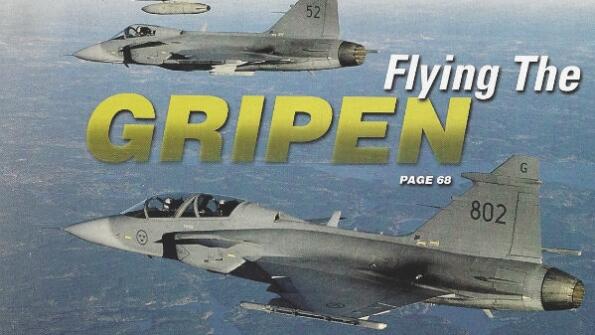
My first indoctrination into the Fans of the Swedish Air Force Club came in 1993. I picked just the right time for the introduction in January from the Norrkoping air base Fortunately, growing up outside Boston prepared me for cold weather.
The flight was to be in a Swedish-built SK-37 Viggen, and to my good fortune in the attack version of the multi-role aircraft. The Swedish Air Force flew fighter/attack and reconnaissance versions of the single-engine aircraft. I was flying with Capt. Torsten Larrson and I do not believe that we went higher than 100 ft. for the first 15 min. of the flight. The view from the back seat of the archipelago off the coast of Sweden was stunning.
We did a number of aerobatics and I was warned by Larrson not to do a tail-slide, as the Volvo RM8 engines preferred not to perform tail-slides. The Volvo engine was a Pratt & Whitney JT8D with an afterburner. The flight was great, and being around the aircraft for a while, I told Larrson that the engine was the best converter of fuel to noise I had experienced in some time.

Following the flight, we retreated to the basement of the operations building, where we had beer and sausage prior to taking a sauna. The Swedish pilots had post-flight briefings down very well.
My next contact with the Swedish Air Force came with a visit to Satenas AFB, the primary training base for the Gripen. The Swedes have built their own fighters for years. and the Gripen was the latest. My visit was in the late fall, so I avoided the really cold weather. I was to fly with Lt. Col. Bjorn Johansson, a born teacher and test pilot.
The flight in the Gripen proved to me that the aircraft was in the same class with all the newer fighters and in some cases better. The Gripen is a relatively small aircraft, smaller than the F-16. The Swedes paid strict attention to developing the warfare information capability of the Gripen, and this was demonstrated on my flight. The aircraft was nimble and a joy to fly. You could tell that the cockpit layout was designed by pilots for pilots. The hands-on-throttle-and-stick (HOTAS) worked extremely well in the Gripen.
At the time of my visit to Satenas AFB, there already was a design set for the upgrading of the cockpit displays with more use of larger color cockpit displays.
The emphasis on a small aircraft, with one engine, good performance and outstanding warfare information systems made the Gripen an ideal possibility for export, an option Saab did not have with previous aircraft. The Gripen also offered a lower fly-away cost than some of its competitors. It has been selected by the air forces of the Czech Republic, Hungary, South Africa and Brazil.
I look at my trips to fly the Viggen, Gripen and several of Saab’s commercial aircraft as some of my most pleasant aviation experiences.
► Read North's pilot report in the September 6, 1999, issue of Aviation Week & Space Technology:
Gripen Key to Sweden's Air Defense Force
► Aviation Week is approaching its 100th anniversary in 2016. In a series of blogs, our editors highlight editorial content from the magazine's long and rich history, including viewpoints from the industry's most iconic names and stories that have helped change the shape of the industry.