
Less Dome than Sieve?
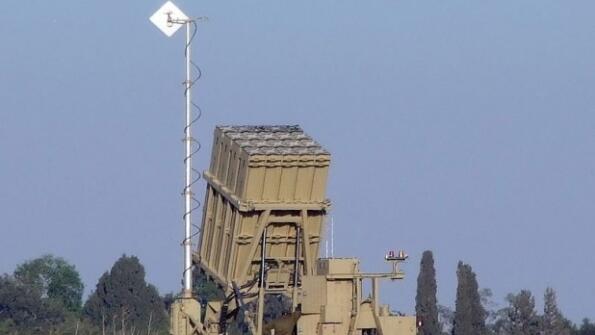
As the Pentagon seeks extra funds to subsidize increased production of Israel's Iron Dome rocket-defense system, its performance amid escalating Gaza hostilities is coming under fire from critics.
Soon to be co-produced with Raytheon in the U.S., Iron Dome was first operationally deployed in April 2011. At the time, prime contractor Rafael said the system's Tamir interceptor performed well, scoring eight hits out of nine attempted in its first combat test.
By August of that year, however, Aviation Week's Alon Ben-David reported that an increase in operational use of the system had exposed shortcomings, notably six out of 30 intercept attempts that failed in Iron Dome's second combat test.
Three years later, critics are harping on the system, even as the Israel Missile Defense Organization asserts Iron Dome's success rate is nearing 90%.
In an article published this week in the Bulletin of the Atomic Scientists, physicist and MIT professor Theodore Postol asserts Iron Dome's battlfield record has not markedly improved since a poor showing in November 2012, when a detailed review of a large number of photographs of Iron Dome interceptor contrails indicated a success rate as low as 5%.
Interestingly, he points out that the anti-rocket system doesn't really need to work all that well, thanks to Israel's extensive network of bomb shelters and a new SMS-based public early-warning system employed by the IDF.
Another critic, former Raytheon IDS engineer Richard Lloyd, is quoted in Bloomberg this week asserting one of Iron Dome's biggest problems is that there aren’t enough batteries to cover the country, meaning interceptors must travel long distances and thus cannot always meet rockets head-on, which Postol says is key to successful warhead destruction.
Lloyd, who Bloomberg says just completed a 28-page critique of Iron Dome for defense consulting firm Tesla Laboratories, said the recent addition of an eighth battery, reported by Aviation Week's David Eshel this week, should help.


