Airbus Flies First Valkyrie CCA Demonstration, Targets Weapon Release Tests
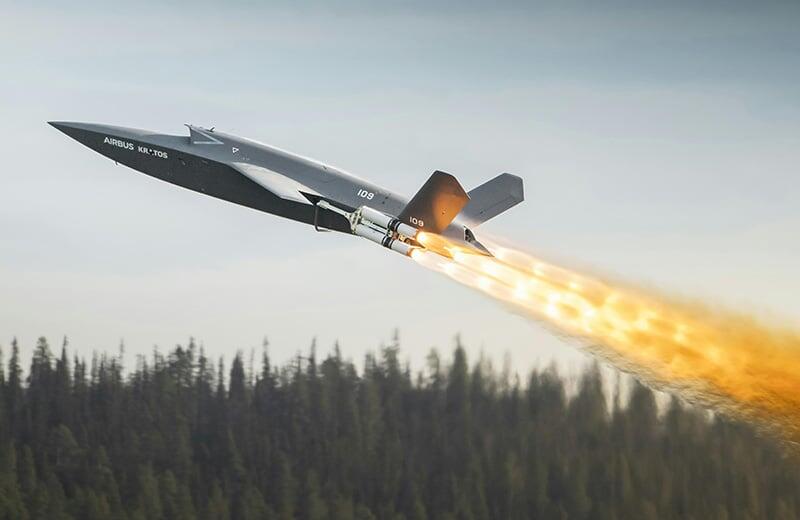
Airbus Kratos Valkyrie uncrewed aircraft.
LONDON—Airbus aims to demonstrate weapons release from a Kratos Valkyrie uncrewed aircraft in 2028 as it develops technologies to compete for Germany’s emerging collaborative combat aircraft (CCA) requirement.
The demonstration would depend on Airbus securing a “solid contract” with the German Defense Ministry, partly to fund the testing and provide access to weapons, Airbus Head of CCA Collaborations and Development Hendrik Sippl told journalists.
The plans follow the successful first flight of one of two Valkyries acquired by Airbus, conducted in Sweden on Sept. 29. Airbus described the sortie as the first flight of a CCA platform in mainland Europe. Turkey has already been regularly flying its Baykar Kizilelma uncrewed combat aircraft from sites in the European part of the country. Airbus acquired the XQ-58A Valkyries as part of its self-funded Uncrewed Collaborative Combat Aircraft (UCCA) development and demonstration program.
The flight trials are intended to demonstrate Airbus' capabilities and position the company for a potential German CCA procurement.
A flight campaign planned for mid-2027 will see Airbus test the Valkyrie equipped with its Multiplatform Autonomous Reconfigurable and Secure (MARS) system and MindShare artificial intelligence technology, enabling the uncrewed aircraft to operate alongside a crewed platform.
The crewed aircraft will be Learjets acting as surrogate Eurofighters, equipped with Rafael Litening 5 targeting pods adapted with datalinks to communicate with the Valkyrie.
Further trials are planned for late 2027, with a weapons-release demonstration targeted for mid-2028.
Airbus is developing its CCA technologies in response to signals from the German Defense Ministry that it wants such capabilities available before the end of the decade.
Defense Minister Boris Pistorius has repeatedly emphasized the need for Germany’s armed forces to achieve Kriegstuchtigkeit, or warfighting readiness, by 2029 to ensure they can respond if NATO deterrence fails.
“If deterrence fails in the NATO environment, we need to be able to defend, and that’s what the German customer has been very loud about . . . we need to have a capability that is supplementing the combat air,” said Manuel Kiefer, Airbus’ Head of NATO/EU Defense Global Business.
Germany has yet to commit significant funding to CCA development, although Sippl said Airbus is responding to a tender for a small study contract. If Berlin is serious about fielding a CCA capability by 2029, more substantial investment will be required.
“The great opportunity of Valkyrie here, as we have the asset, is that it is not only a paper exercise, but is being done on the real asset, where we can fly it, operate it . . . there’s lots of learn,” Kiefer said.
The Valkyrie demonstrations will also support Airbus’ development of its proposed U760 Ravenstorm CCA, which the company aims to bring to market in 2032.
But Airbus is facing potentially stiff competition. Boeing is proposing its MQ-28 Ghost Bat, and General Atomics has put forward the FQ-42 Vengeance it is developing for the U.S. Air Force’s own CCA program, while German defense technology company Helsing is also developing its CA-1 Europa CCA domestically following its acquisition of training aircraft manufacturer Grob, which could also compete.
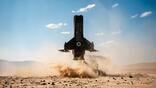
The Valkyrie’s first flight, meanwhile, was “picture-perfect,” Sippl said. Following a rocket-assisted takeoff, the aircraft climbed through altitudes ranging from 10,000 to 30,000 ft. It reached speeds of up to Mach 0.8 and flew a series of racetrack patterns incorporating acceleration and deceleration maneuvers. Engineers also tested the aircraft’s ability to reconfigure a preplanned route. The flight concluded with a soft landing using a combination of parachutes and airbags.

Related Content