
Latest MRO Content by Aviation Week & Space Technology
Sep 23, 2013
EASA Outlines Upcoming Rulemaking The European Aviation Safety Agency's (EASA) four-year rulemaking outlook includes little of significance to MRO in 2014, but work on several key initiatives with longer-term deadlines is featured prominently. Reviewed annually, the planning document sets deadlines for the following year and tentative schedules for the three subsequent years. EASA released the 2014-18 version in late August.

Sep 23, 2013
As aircraft increasingly depend on electrical power, sensors need to keep up with overheating-detection capabilities, and repair stations need new certifications. Here is a sampling of some new electrical components and services: 1. Let Me See Supplier: LoPresti Aviation Offering: The BoomBeams lighting system is designed to provide higher landing and taxi light output, and consume less power than stock lighting equipment, to reduce overall lighting and maintenance costs, according to the company.
Sep 23, 2013
When the nearest hardware store is 350 mi. straight down, tool control takes on a whole new dimension. Take away gravity, and air, and it gets even harder. Just ask Jill McGuire, a private pilot who was also the engineer in charge of crew aids and tools for the last servicing mission to the Hubble Space Telescope in May 2009. “You have to take everything with you,” she says. “You don't get a chance to run to Home Depot.”

Sep 23, 2013
In the aircraft parts world, speed matters. If properly applied, it reduces inventory, saves money and assures components are where they need to be when they are needed. The trick is flowing those parts through the system more quickly. That is the aim of Southwest Airlines' recently initiated “Project Velocity,” an effort that promises a 5-7% reduction in per-aircraft parts inventory, according to Peter Requa, director of supply chain management. “We expect to take our per-aircraft inventory down from $650,000 . . . to $610,000 or $600,000,” he says.
Sep 23, 2013
In late December 2011, a U.S. Marine Corps mechanic conducting a routine phase inspection of a UH-1Y Huey discovered that the helicopter's transmission pylon beam and the main beam joint were disintegrating. Left unchecked, the problem would have resulted in disaster. The mechanic's finding led to a Corps-wide inspection and, ultimately, the release of an engineering advisory report.

Sep 23, 2013
Surplus parts, once an afterthought, are shaping MRO strategies
Sep 23, 2013
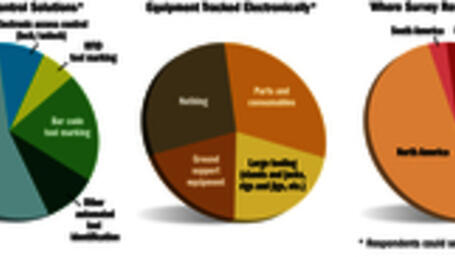
Survey assessing how industry tracks tools finds desire for improvement and identifies some obstacles

Sep 23, 2013
Demand for British aftermarket work expected to grow but startups face uphill struggle