
Latest MRO Content by Aviation Week & Space Technology
Sep 23, 2013
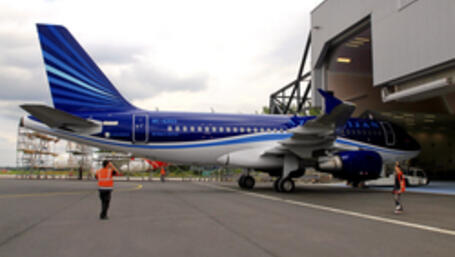
A J Walter is rebranding Azerbaijan's aircraft, partnering with BA Engineering

Sep 23, 2013
No carrier in history has operated more Boeing 747s than Japan Airlines
Sep 23, 2013
MRO providers use Big Data to improve operations

Sep 23, 2013
1. Cold Starter Supplier: AIR BP Lubricants Offering: BPTO 2389 is a low-viscosity, gas-turbine oil, offering exceptional cold-start capability. Many airlines rely on BPTO 2389 in their auxiliary power units (APU) because it gets them started after long cold-soaks at altitude. BPTO 2389 is the only MIL-PRF-7808 Grade 3 qualified oil that is fully approved in all Honeywell and Hamilton Sundstrand APUs. www.airbp.com/lubricants Link 601


Sep 23, 2013
To make the concept of an inflatable hangar fly, first you've got to make sure the structure itself does not fly away. Jose Antonio Sanz insists his company's inflatable structures can cope with winds of 100 kph (62 mph), even 150 kph (93 mph). “We're talking to a customer who will require 180 kph,” protection, says Barcelona-based Buildair's commercial director. A telematic control system, coupled with multiple 20-cm (7.87-in.) screws drilled into the tarmac, is essential to a structure's stability.
Sep 23, 2013
The Integrated Vehicle Health Management Center at England's Cranfield University was founded five years ago, after a proposal for it won an international competition sponsored by Boeing.
Sep 23, 2013
Washington Cabin 'Crewmembers' Take Note The aviation maintenance world needs no introduction to the Labor Department's Occupational Safety and Health Administration (OSHA) regulations. Typically, MRO-related OSHA rules are linked to hangars or back shops and associated with risks such as exposure to chemicals. But an FAA policy issued in August and effective Sept. 26 brings OSHA regulations to aircraft cabins and reads broadly enough to cover mechanics that work in them.