
Latest Commercial Aviation Content by Aviation Week & Space Technology
Oct 14, 2013
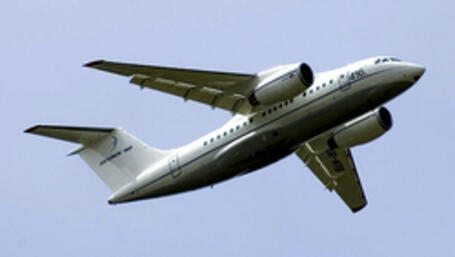
The An-148 is a twin-engine regional jet designed to serve the 70-80-seat market. First flight took place in 2004, with type certification by Russia and Ukraine in 2007. Power for the aircraft comes from two Ivchenko-Progress D436-148 turbofan engines. Two test aircraft and 15 production aircraft were produced through 2012, and an additional 60 are forecast for production through 2022. The An-158, a 99-passenger version that is also powered by D436-148s, first flew in 2010.
Oct 14, 2013
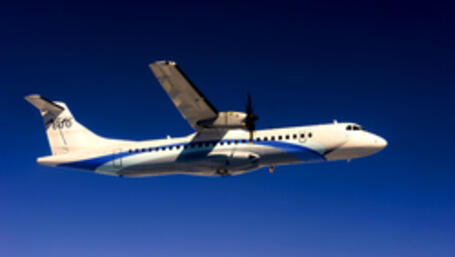
The ATRs are turboprop-powered regional transport aircraft built by a joint venture of EADS and Alenia Aermacchi. The ATR 42's first delivery occurred in 1985, followed by the ATR 72 in 1989. The latest versions are the ATR 42-600 and ATR 72-600. Both -600 variants are powered by a pair of Pratt & Whitney PW127M engines, rated 2,400-2,750 shp each. Through 2012, 422 ATR 42s and 611 ATR 72s were delivered. Production of 668 ATRs is forecast for the 2013-22 period.
Oct 14, 2013
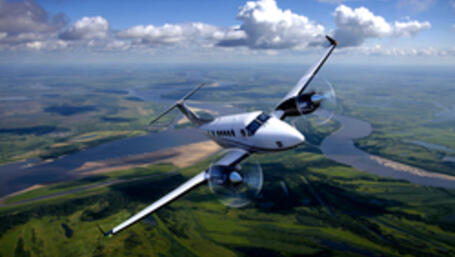
Beech launched the King Air series of 8-12-seat, twin-turboprop aircraft in 1963. Since then, numerous variants have appeared. Total production 6,314 through 2012. Beechcraft currently markets the King Air C90GTx, King Air 250 and King Air 350i. The C90GTx is powered by two Pratt & Whitney PT6A-135 turboprops producing 550 shp each; the 250 by PT6A-52s rated at 850 shp each; and the 350i by 1,050-shp PT6A-60As. Some 1,286 King Airs are expected to be produced in the 2013-22 period.
Oct 14, 2013
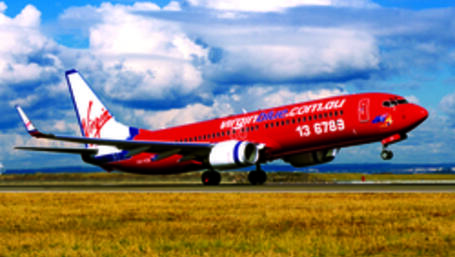
The 737 series is a family of twin-engine, narrowbody commercial transports. Seating capacity varies depending on model, though the most typical two-class configurations are 126 passengers for the 737-700, 162 for the 737-800 and 180 for the 737-900ER. All three models, which are the current production versions, are powered by two CFM56-7 turbofans. The first 737 flew in April 1967 and received FAA certification in December 1967. Through 2012, 7,437 Boeing 737s have rolled off the production lines.
Oct 14, 2013
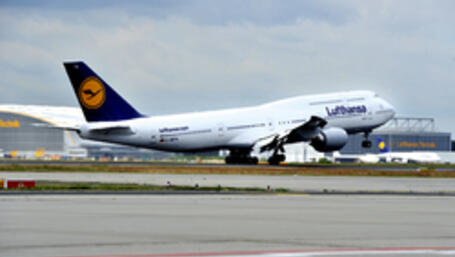
The 747 is an intercontinental widebody commercial transport aircraft powered by four turbofan engines. First flight and certification occurred in 1969. In February 2010, Boeing conducted the maiden flight of the 747-8 series, which includes the 747-8 Intercontinental passenger model and 747-8 Freighter. Both are equipped with four GE GEnx engines rated 66,500 lb. thrust each. The 747-8I is stretched 5.6 meters (18.4 ft.) compared to the 747-400, to accommodate 467 seats in a three-class configuration.
Oct 14, 2013
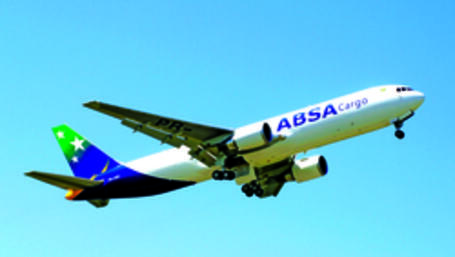
The prototype for this twin-engine, widebody commercial transport was rolled out in August 1981, with first flight the following month; through 2012, Boeing produced 1,108 767s. Only two civil 767 versions are currently in production: the extended range 767-300ER passenger model and -300F freighter. The 767-300ER seats 218 in a three-class layout or up to 350 in one class and has a maximum range of 5,990 nm. The -300ER is available with a choice of GE CF6-80C2 or Pratt & Whitney PW4000 engines. The -300F is powered by the CF6-80C2.
Oct 14, 2013
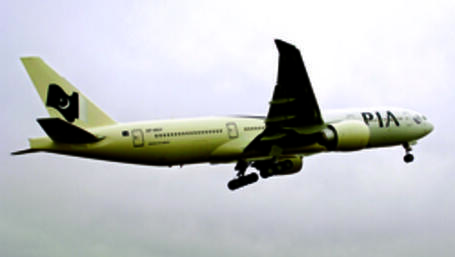
The 777 is a twin-engine, widebody jetliner. First flight occurred in June 1994, followed by FAA/JAA certification in April 1995 (Pratt & Whitney-powered version). Deliveries began in June 1995. The 777-200ER seats 301-440 passengers, and is powered by two PW4000, Trent 800 or GE90 turbofans rated 84,000-95,000 lb. thrust each. Two newer versions are the 777-200LR and -300ER. The -200LR, which seats 301 in three classes, is powered by a pair of 110,100-lb.-thrust GE90-110B1 or 115,300-lb.-thrust GE90-115BL turbofans.
Oct 14, 2013
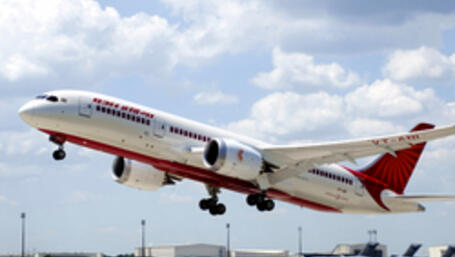
The 787 Dreamliner is a family of twin-engine widebody airliners with three versions. The 787-8 carries 210-250 passengers and has a range of 7,650-8,200 nm. The 787-9, lengthened by six meters (20 ft.), carries 250-290 passengers and has a range of 8,000-8,500 nm. The 787-10 is stretched another 5.5 meters beyond the 787-9. All three models are sold with either two Rolls-Royce Trent 1000 or General Electric GEnx turbofans.