
Latest Commercial Aviation Content by Aviation Week & Space Technology

Mar 17, 2014
Unmanned aircraft use threatens to become ungovernable unless FAA acts
Mar 17, 2014
The Senate aviation subcommittee let the commercial sector air its desires last week about congressional action. For the most part, commercial representatives agree about what they want: maintain higher, earlier funding levels for the FAA's NextGen ATC modernization effort and keep pressure on the agency to provide results to industry. They also want Congress, the White House and even the American public to stop eyeing commercial aviation as an automated teller machine, or “piggybank,” and treat it more like a national asset.

Mar 17, 2014
In its rush to prove the business case for airlines to buy and use next-generation air transportation system (NextGen) avionics, the FAA faces a quandary: What happens if trials designed to show positive results reveal the opposite?
Mar 17, 2014
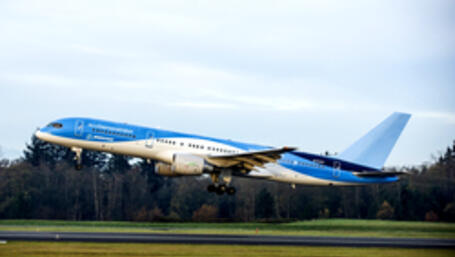
Development 787 and 757 readied for technology testbed programs
Mar 17, 2014
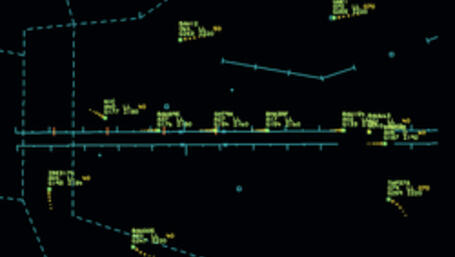
At capacity-constrained airports around the world, high winds are a major cause of flight delays and cancellations, often as a result of the knock-on effects of reduced airport flow rates. Landing aircraft currently have to maintain set distances apart due to the wake vortices occurring from the wingtip, but research has shown that in strong headwinds, ground speeds on approach are reduced and the effect of the vortices is quickly dissipated, potentially allowing the distances separating the aircraft to be reduced.
Mar 17, 2014
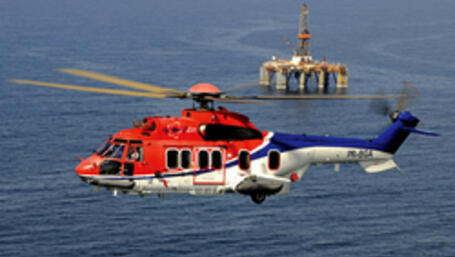
For offshore helicopter pilots, the approach to oil and gas platforms is one of the most work-intensive periods of the flight. During bad weather, pilots can struggle with high winds, while low visibility and clouds sometimes obscure heli-decks that often sit hundreds of feet above the sea level, and obstacles such as cranes and gas flares create challenges in the final moments before touchdown.

Mar 17, 2014
Temperatures soar to beyond 1,000C in the turbine sections of helicopter engines. This is hardly a hospitable environment for a condenser microphone. But Berlin-based German Aerospace Center (DLR) researchers, because they needed to take sound measurements in just such inhospitable places for experiments useful in the decades-long pursuit of quieter helicopters, have designed a special housing and coiled sound canal probe for the job.
Mar 10, 2014
FAA is banning more than 4,200 older Cessna twin pistons from flight into known icing, a move the agency says is necessary because the aircraft were not certified for such operations and have exhibited unusual flight characteristics when encountering icing.