
Latest Commercial Aviation Content by Aviation Week & Space Technology
Nov 03, 2014
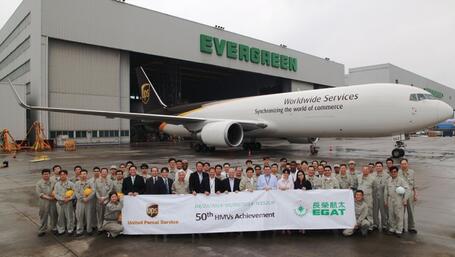
GE Aviation, EGAT partnership targets expanding market for GEnx MRO
Nov 03, 2014
Airbus A319/A320/A321 These models, along with the A318, make up the Airbus A320 family of twin-turbofan, narrowbody airliners. The initial model was the A320, which made its first flight in February 1987. A320 deliveries began in 1988, followed by the stretched A321 in 1994 and the shortened A319 in 1996. All three original models are available with CFM56 or International Aero Engines V2500 engines. The A319 typically seats 124 passengers, the A320 carries 150, and the A321 seats 185. Through 2013, Airbus produced 1,395 A319s, 3,544 A320s and 877 A321s.
Nov 03, 2014
Airbus A330 Airbus developed the A330 twin-engine, widebody commercial passenger transport to replace aircraft such as the A300, DC-10-10 and L-1011. An A330 prototype first flew in November 1992, with customer deliveries following in December 1993. Customers have a choice of turbofan engines in the 64,000-72,000-lb.-thrust class: the GE CF6-80E1, Pratt & Whitney PW4000 or Rolls-Royce Trent 700. Three A330 models are available. The A330-300 seats 335 passengers in two classes, or 295 in three classes. The A330-200 seats 293 in two classes, or 253 in three.
Nov 03, 2014
The A340 is a four-engine, intercontinental, widebody commercial transport aircraft. A prototype flew in October 1991, and deliveries began in January 1993. The A340-200 and -300 were certificated by the European Joint Aviation Authorities in December 1992 and the FAA in February 1993. Both models are powered by four 31,200-34,000-lb.-thrust CFM56-5C4 turbofans. Two newer models, the longer-range -500 and the stretched -600, are powered by Rolls-Royce Trent 500s. Typical seating for the -200, -300, -500 and -600 is 262, 295, 313 and 380 passengers, respectively.
Nov 03, 2014
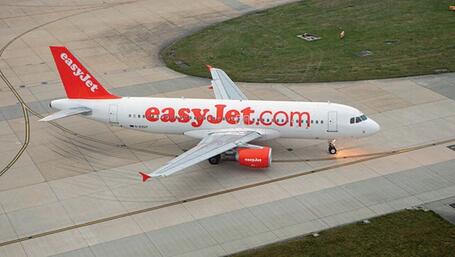
Business model for legacy and low-cost carriers is converging, in both the U.S. and Europe.
Nov 03, 2014
Currently in development, the A350 is a twin-engine, widebody jetliner intended to compete with Boeing’s 787 and 777. The A350 is powered by Rolls-Royce Trent XWB engines rated in the 75,000-97,000-lb.-thrust range, and will have a cruise speed of around Mach 0.85. Three basic versions are being marketed: the -800, -900 and -1000. Depending on the version, the A350 seats 276-369 passengers, and will have a range of 8,100-8,500 nm. The maiden flight occurred in June 2013. Type certification is expected in late 2014, -900 service entry in the same timeframe.
Nov 03, 2014
In developing the 525-passenger A380, Airbus chose to leap past Boeing’s 747 in capacity class. Boeing markets the 747-8 to compete with the A380 indirectly, but no direct competition to the A380 exists in the 500-plus-seat market. The A380 is powered by four turbofan engines rated at 70,000-76,500 lb. thrust each, and can be outfitted with either the Rolls-Royce Trent 900 or GE/Pratt & Whitney Engine Alliance GP7200. Airbus currently produces only a passenger version of the A380.
Nov 03, 2014
The C212 is an unpressurized, twin-turboprop-powered military transport with room for up to 25 fully equipped troops or a payload of up to 6,504 lb. Along with transport duties, the aircraft has seen popularity in a maritime patrol role. Developed by Spain’s CASA, and once known as the Aviocar, the C212 made its first flight in March 1971; deliveries began in May 1974. Some 477 C-212s (of all versions) were built through 2013, including about 110 aircraft assembled by Indonesian Aerospace (IAe).