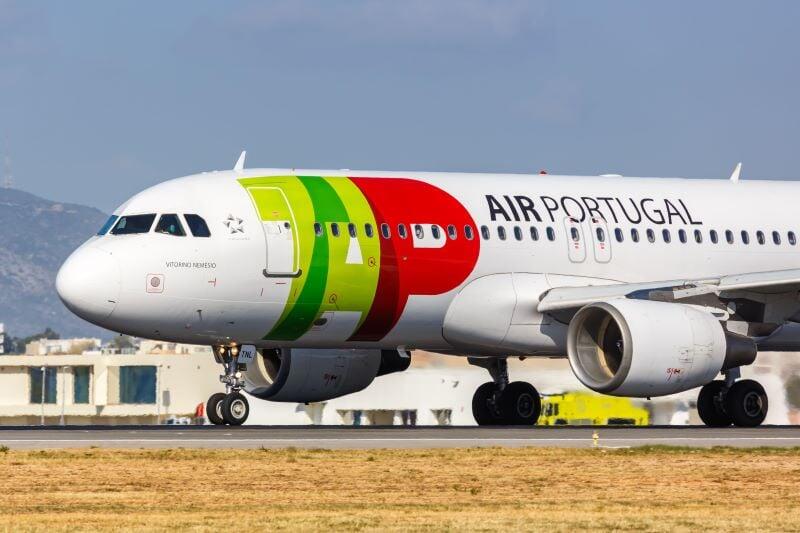
TAP Airbus A320ceo
Back in April, the Carbon Analysis considered the privatization of TAP Air Portugal, and how efficient the resulting group would be. Both Lufthansa and Air France-KLM bid for the 44.9% stake in TAP, and last week, Lufthansa won that bid.
TAP is the most efficient of the three airlines, followed by Air France-KLM, then Lufthansa. However, Lufthansa’s current fleet is more in congress with TAP’s, which will enable operations to merge more seamlessly but will also support efficiency in ways beyond just fuel saving, such as in maintenance operations and components.
But exactly where is this crossover, and how will this affect efficiency at an aircraft family level?
The chart shows that TAP is more efficient across most of the families the two carriers have in common, except for the Airbus A320neo, where Lufthansa has a marginal edge. Lufthansa does not operate any A330neos currently.
The cause of the substantial difference between Lufthansa and TAP A320ceo efficiency comes down to seats. TAP has more dense configurations, meaning emissions are spread among more seats, and thus efficiency is greater.
The reason for the disparity between A330 types is similar. Lufthansa operates the A330-300 while TAP chooses the A330-200. Typically, the 300 is the more efficient, but not in this case. Half of Lufthansa’s A330-300 fleet are configured with 236 seats, significantly less than the 263 on TAP’s A330-200s. When the A330neos operated by TAP are also considered, the difference increases further.
Ultimately, Lufthansa is investing in an efficient carrier, and TAP will be a welcome addition to the Lufthansa Group portfolio from an emissions standpoint, particularly with the prospect of greater ownership as TAP nears full privatization.