
Pilot Report: Flying The Embraer 170 (2003)
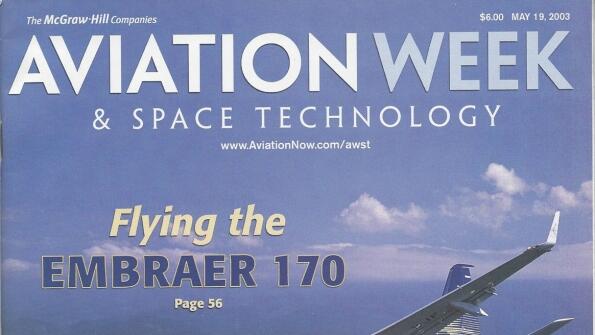

North's Embraer 170 pilot report was published in the May 19, 2003 issue of Aviation Week & Space Technology. Click here to read it.
My first association with Embraer came about through Bob Hotz, the then Editor-in-chief of Aviation Week. He said that he had recently read about the new aircraft manufacturer in Brazil, and that we needed to get up to speed on Embraer. He also knew that as a former pilot/flight engineer for Pan American I had spent time in Brazil, and that I was the only one on the staff with that travel experience. That was all I needed to schedule a trip to Sao Jose dos Campos in 1978. That trip started my association with Embraer until my final test flight in a new e-jet 170 in 2003.
My initial trip culminated with a test flight of the EMB 110 Banderiante from the growing complex in Sao Jose dos Campos and a long interview with Embraer’s CEO Ozires Silva. My admiration for Silva and his achievements only grew as I spent more time with him in Brazil.
At the time of my visit, Embraer was building the Bandeirante, the EMB326 Xavante trainer for the Brazilian Air Force and the EMB 200 agricultural aircraft.
I flew the non-pressurized Banderiente from a grass strip and found the twin-turboprop to be very rugged and economical for short haul trips fitting its 16-seat capacity.
There were more than 500 Banderientes built. The next flight of an Embraer aircraft was a Tucano trainer in September of 1983 from Sao Jose dos Campos. The Tucano has had many modifications since then and is in service with the Royal Air Force as a primary trainer. It is a fun aircraft to fly and perform aerobatics.
Then came the Xingu, which was not commercially acceptable. I told Silva that it was short-coupled and had too small of a cabin for a twin-turboprop. He appreciated my pilot report and said that he would then appreciate my positive reports more.
My next trip to Brazil included a flight in the Brasilia EMB 120. This was Embraer’s entry in the 30-seat commuter market. It was a good pressurized, twin-turboprop aircraft. It did quite well in regional operations. I also had the opportunity to fly the ill-fated CBA-123. It was a great aircraft to fly, with its twin turboprop pusher configuration. The development costs plus the high-sticker price for a small regional aircraft doomed the aircraft from the start.
I flew Embraer’s introduction into the regional jet aircraft market, the EMB 145 and EMB 135 from airports in the U.S. The EMB 145, later named the ERJ 145 been very successful in the regional market.
During my last trip to Brazil in 2003 I reflected on the growth of Embraer and the people I had met there. The steady growth of Embraer has resulted in a first class manufacturing facility able to produce a wide-range of airliners and business jets. My initial interviews with Ozires Silva were followed by time with Guido Pessotti, the chief engineer, Satoshi Yokota head of advanced designs and later president of Embraer, Mauricio Botelho. They all provided good interviews with facts and excellent perspective of their products and the future of the industry. Embraer also has been at the forefront of offering education and opportunity for many of the younger people in Sao Jose dos Campos.
I flew the 170 from Embraer’s new testing facility at Gaviao Peixoto. The Brazilian company had run out of space at its main facility and built this new complex with a long runway for aircraft test flights. I found that the 170’s cockpit matched the current Airbus and Boeing aircraft with a comprehensive layout and good situational awareness. The 170 was an excellent example of the lead aircraft for a family of airliners. Since my flight in the 170, Embraer has been delivering the larger versions from the same family of airliners.
► Aviation Week is approaching its 100th anniversary in 2016. In a series of blogs, our editors highlight editorial content from the magazine's long and rich history, including viewpoints from the industry's most iconic names and stories that have helped change the shape of the industry.