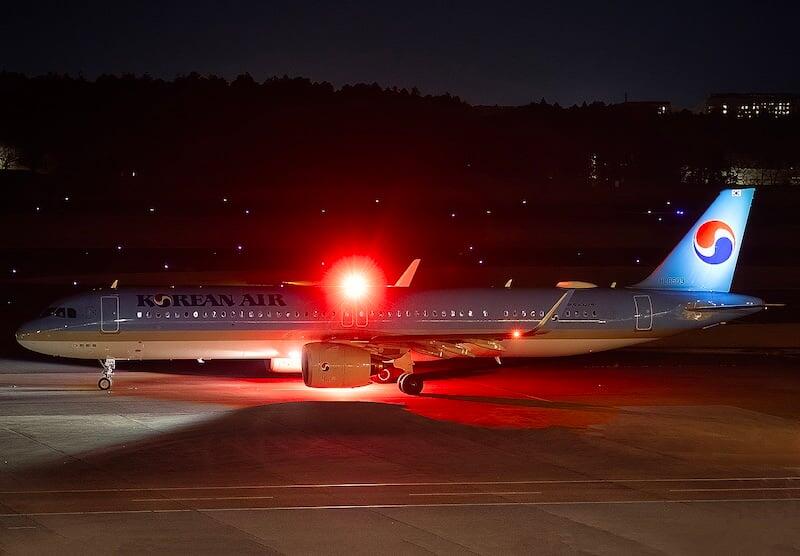
Korean Air reported a significant increase in its third-quarter profit, despite fuel cost headwinds that have put pressure on earnings for most of the airline industry.
The airline reported a net profit of 929.7 billion South Korean won ($690.8 million) for the quarter, up from a profit of 91.9 billion won in the same period a year earlier. For the first three quarters of the year, the carrier’s net profit was 1.1 trillion won, versus 681 billion won in the prior year.
Korean Air said the improvement was partly driven by favorable exchange rate shifts toward the end of the third quarter. Revenue gains also helped, with passenger revenue up 20% year over year and cargo revenue increasing by 34%.
Operating costs rose by 27%, with fuel expenses increasing 67% in the quarter and non-fuel costs rising by 12%.
International operations benefited from strong demand for inbound travel to South Korea and growth in transit demand in markets such as North America-China, Europe-Southeast Asia and China-Japan. This helped offset slower outbound travel demand, the carrier said.
Korean Air’s capacity was up 2.6% year over year in the third quarter, with traffic increasing by 3.7% and load factor up one percentage point to 85%.
The airline had 166 passenger and freighter aircraft in its fleet as of Sept. 30, a net increase of one aircraft from the start of 2026. It has phased out four Boeing 777s, one A380 and one A330 so far this year, and added five 787-10s, one A350 and one A321neo.

Related Content