Cathay Pacific is confident it has sufficient long-haul aircraft on order and it is now moving ahead with plans to upgrade its medium-haul fleet.
The airline is looking to acquire more aircraft to operate routes within the Asia-Pacific region, Chief Customer and Commercial Officer Ronald Lam told investors in a Nov. 25 briefing. Lam, who has been named as Cathay Pacific’s next CEO, said the planned orders will “fuel growth for the group moving forward.”
Cathay has issued a request for proposals for the medium-haul requirement, and is “in regular discussions with [manufacturers] in this regard,” Lam said.
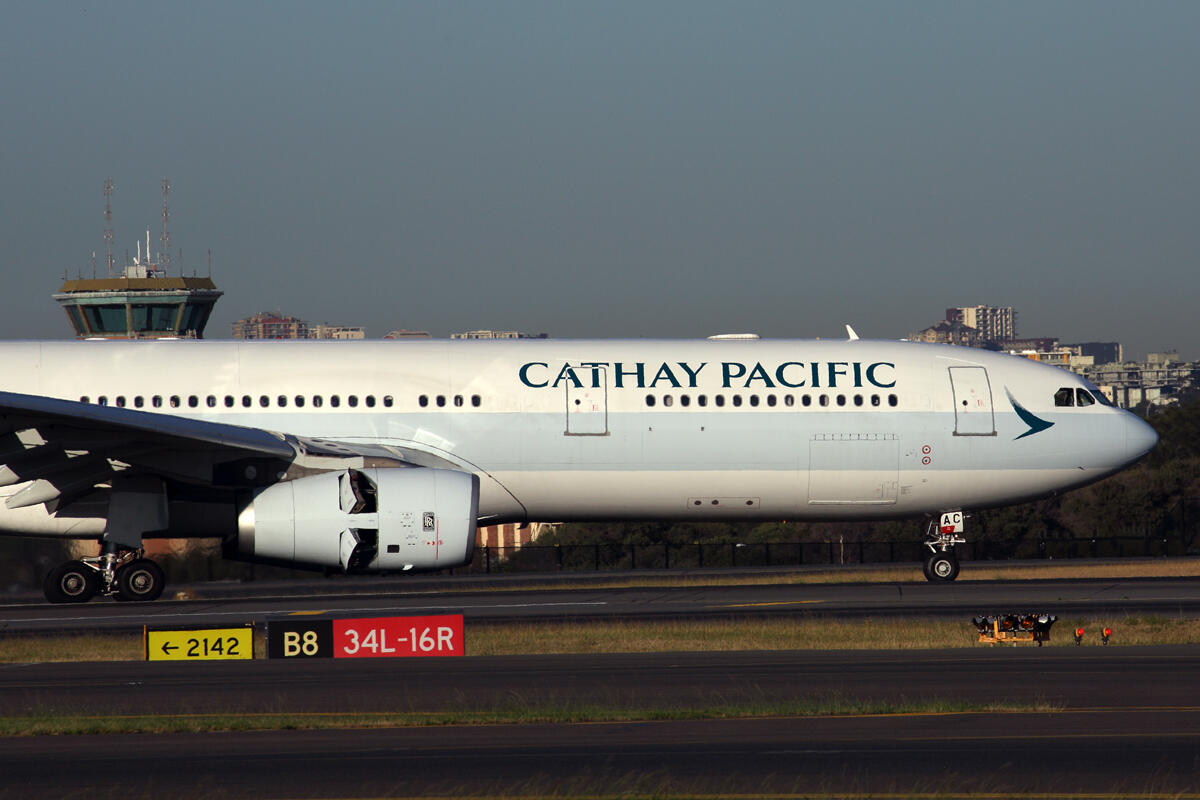
The carrier has a fleet of 44 Airbus A330s that mostly handle medium-haul operations, of which 31 are in service. It also has 15 A320/A321 family aircraft in its mainline fleet, of which five are in service—all A321neos. The carrier began taking deliveries of the new-generation narrowbody last year and has nine more A321neos on order.
Regarding the long-haul passenger operation, Lam said Cathay’s current fleet and orderbook is sufficient to meet the airline’s growth plans in coming years.
He noted that the carrier’s large fleet of Boeing 777-300ERs are “there to stay,” and the carrier still has some A350-900 and -1000 deliveries yet to arrive. Cathay also has 21 777-9s on order, and these are due from 2025 onward, Lam said.
The freighter fleet is another focus for Cathay. The carrier is working with manufacturers with the aim of adding more freighters from 2025, said Lam.
Lam also discussed the outlook for Cathay’s mainland China network, which is a key market for the airline.
Cathay is not expecting any significant recovery in its mainland capacity until Chinese authorities relax restrictions on international flights and allow inbound transit flows to resume, Lam said.
The airline is not able to add the frequencies to the mainland that it needs, Lam said. For example, he said Cathay is only allowed one flight per week into Shanghai.
Travelers from international flights are also not allowed to use airside transit in Hong Kong to directly connect to a mainland flight. However, Lam noted that passengers can book flights to Hong Kong, then three days later fly to the mainland if they qualify to enter. Cathay has been “seeing a bit of demand” from travelers using this method, Lam said.
Meanwhile, outbound demand from mainland China has been stronger, Lam said. Flights from China to other international points via Hong Kong have become more popular as Cathay’s network has expanded.

Related Content