
Air Transport Aircraft & Propulsion
May 15, 2007
AerCap, the Dutch aircraft lessor, signed a firm order with Airbus yesterday for an additional 10 A330-200s valued at $1.6 billion, bringing to 30 the number of the type it has on order. "Since AerCap ordered 20 new [A330-200s] in December last year, we have already lined up customers for 13 out of the 20 aircraft," CEO Klaus Heinemann said. "The order for an additional 10 aircraft will help us to further expand our portfolio in the attractive market for modern, smaller widebody aircraft."
May 15, 2007
CFM President Eric Bachelet reiterated his confidence that Pratt & Whitney's initiative to develop replacement parts for CFM56-3 engines will not affect its business. "We don't fear competition, we're used to it," he told ATWOnline. "We've [been] competing for 30 years and we're continuously adding value. We have invested $1.5 billion in upgrading the technology and customers know this." He also maintained that CFM is not interested in launching a similar initiative to produce replacement parts for its competitor's engines. "We are very clear: We will not do that," he said.
May 15, 2007
Embraer delivered the first of eight E-190s to Mandarin Airlines, its first to a Taiwanese carrier. The aircraft are being leased from GE Commercial Aviation Services and will replace F50s and F100s.
May 14, 2007
CFM International said its CFM56-7B and -5B Tech Insertion program is on track, noting that the first aircraft powered by the -7B engines with the feature, a 737-900ER, was delivered to Jakarta-based Lion Air at the end of last month. Entry into service of the CFM56-5B variant for A320 family aircraft is planned for the 2007 fourth quarter. "We expect the [Airbus] aircraft certification during the third quarter," confirmed Executive VP Francois Planaud at a briefing in Helsinki last week that focused on the OEM's commitment to produce environmentally friendly engines.
May 14, 2007
Boeing said three large 787 composite fuselage sections, one forward and two aft, arrived Friday at its Everett plant, where final assembly of the Dreamliner will take place. The all-composite forward section, 21 ft. in diameter and 42 ft. long, was manufactured by Spirit AeroSystems in Wichita. Its landing gear is installed. The two aft composite sections were manufactured and joined by Vought Aircraft Industries in Charleston, S.C. One section is 23 ft. long and 19 ft. in diameter while the other is 15 ft. long and 14 ft. in diameter. The sections were delivered via the Dreamlifter.
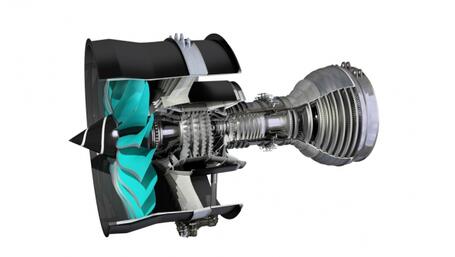
Feb 26, 2014
Rolls-Royce has released details of two new engine development programs, Advance and UltraFan, slated for entry into service from 2020 and 2025, respectively.
Feb 26, 2014
The chances of ATR getting approval from both of its shareholders quickly for a new large turboprop are looking remote, judging from comments made by Airbus Group chief strategy officer Marwan Lahoud at the company’s annual press conference in Toulouse.
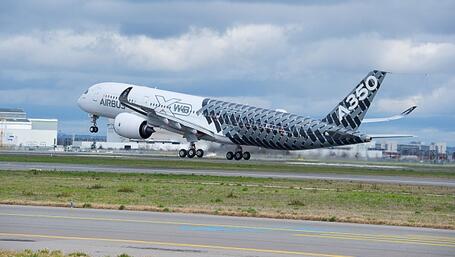
Feb 26, 2014
The A350 XWB flight test aircraft, MSN2 and MSN4, have both completed their first flights, bringing the total number of A350 XWBs now flying from two to four.
Feb 26, 2014
Aviation Corp. of China (AVIC) subsidiary Xi’an Aircraft Industry Co. plans to apply to the Civil Aviation Administration of China (CAAC) to ground MA60 operations as soon as possible for safety inspections following another incident on the Chinese-produced regional aircraft.
Feb 25, 2014
China Southern Airlines has taken delivery of its first of 10 Boeing 777-300ERs.

Feb 25, 2014
When Air Transport World was launched 50 years ago, the airline industry was just five years into the “Civil Jet Age.” The first issue of ATW in May 1964 excitedly chronicled how the fast-growing business had used jet aircraft to increase worldwide annual revenue by 45% to $7 billion in 1963 compared to $4.8 billion in 1958. In 2013, worldwide airline revenue topped $700 billion—a more than 100 times increase in the 50 years this magazine has been publishing.
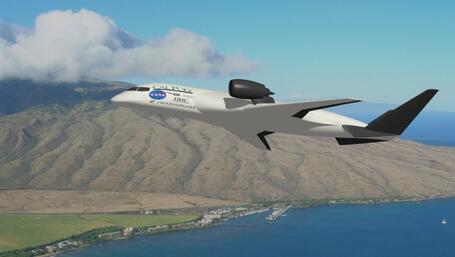
Feb 25, 2014
Will airliners always look the same as they do today? The answer is taking shape in research centers in Europe and the US, but will depend on when Airbus and Boeing begin designing their next generation of all-new aircraft.