
33 Years Ago – Boeing 757 Makes First Flight (1982)
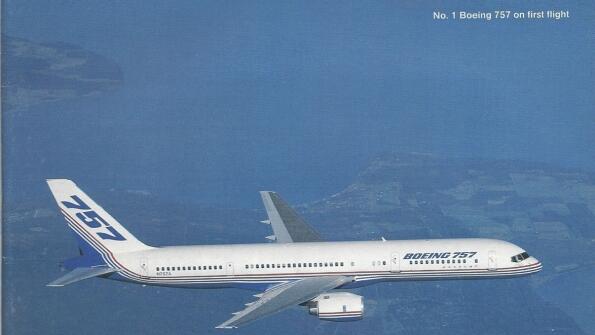
The Boeing 757 made its first flight on Feb. 19, 1982, and it was not without its challenges. The aircraft’s engine indication and crew alerting system (EICAS), then a new feature in Boeing’s 757/767 ‘glass cockpit’ design, indicated a stall in the No. 2 Rolls-Royce RB.211-535C engine which was running at flight idle. Test pilot Lew Wallick later recalled the EICAS first indicated a problem by flashing up a warning about low oil pressure in the engine, followed by an amber light on the caution panel.
Wallick said that an attempt to increase power by advancing the throttles failed, with the EICAS confirming the engine was outside the windmill-start envelope. A normal air start was carried out and the aircraft landed normally at Paine Field in Everett, Wash., after a 2-hr., 31-min. flight.
The incident, although an unfortunate event to occur on a first flight, proved the value of the new systems on the 757 and showed that the new technology behind the controversial move from a three-person to a two-person crew was sound. Wallick later said that “even with a flight engineer, we wouldn’t have caught it until the hard-wired light came on, unless you were looking at those gauges as it happened.”
Aviation Week & Space Technology reported the flight in its March 1 edition, but a photo of the 757 in flight would not make the magazine’s cover for two more weeks. The airliner was certified in December, 1982 and entered service with Eastern Airlines on Jan. 1, 1983.
Production ended in 2005, but 819 757s are still in service. And the aircraft is still making news: just this week, Aviation Week editors Guy Norris and Jens Flottau reported that Boeing has decided against bringing the 757 back to market with new engines.

► Aviation Week is approaching its 100th anniversary in 2016. In a series of blogs, our editors highlight editorial content from the magazine's long and rich history, including viewpoints from the industry's most iconic names and stories that have helped change the shape of the industry.
Related Content