
1987: A320 First Flight Remembered
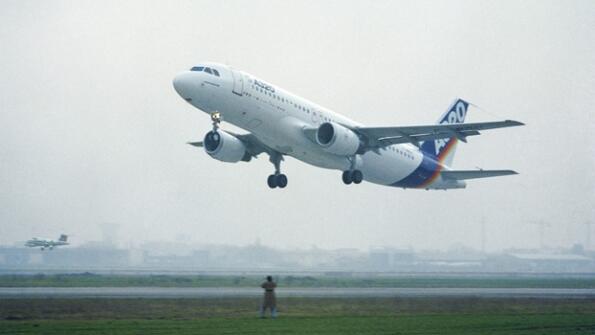

Today’s flight of the Pratt & Whitney PW1100G-powered Airbus A320neo is the most significant milestone in the history of the single-aisle twin since the original CFM56-5 powered prototype flew for the first time in February 1987.

Yet reading the compilation of reports produced by Aviation Week’s Jeffrey Lenorovitz over the following few editions in March 1987 show just how much more has changed since the A320’s wheels left the runway at Toulouse on that Sunday just over 27 years and seven months ago. Even before the roll out, which took place on a chilly February morning with Prince Charles and Princess Diana as guests of honor, the aircraft already looked destined to be the most successful European airliner ever made with 439 commitments. “We have every justification for taking an optimistic view on the mid- and long-term prospects for this program,” Franz-Josef Strauss, the chairman of Airbus Industrie’s supervisory board, is quoted as saying at the time.

How right he was. As the A320neo made its debut this morning, Airbus has delivered more than 6,200 A320s and has a firm backlog of more than 4,700. Of these more than three-quarters are A320neo orders. Demand for the advanced fly-by-wire airliner, which was the first to feature side-stick controllers in place of the conventional yoke, is reflected in the ramp up of production numbers. At the time of Aviation Week’s report Airbus projected it would be producing eight A320s per month in late 1990 –- a number that was unheard of before for a European jet airliner. Today a combined tally of 42 A320 family aircraft a month leave factories in France, Germany and China -– or roughly one every 17 hours. This will grow to 44 per month in 2016 as a new line is added in Alabama in the U.S -– another development that was unthinkable at the dawn of the program in 1987. The widespread adoption of the A320 in North America, and the siting of an assembly site on the continent, is all the more remarkable given the hostile atmosphere over accusations of trans-Atlantic subsidy violations that feature prominently in Aviation Week’s coverage at the time.
► Read the 1987 Aviation Week & Space Technology reports.
► Aviation Week is approaching its 100th anniversary in 2016. In a series of blogs, our editors highlight editorial content from the magazine's long and rich history, including viewpoints from the industry's most iconic names and stories that have helped change the shape of the industry.